News
Advancing gender equality in the face of backlash? SAIs have an important stake
07/03/2025
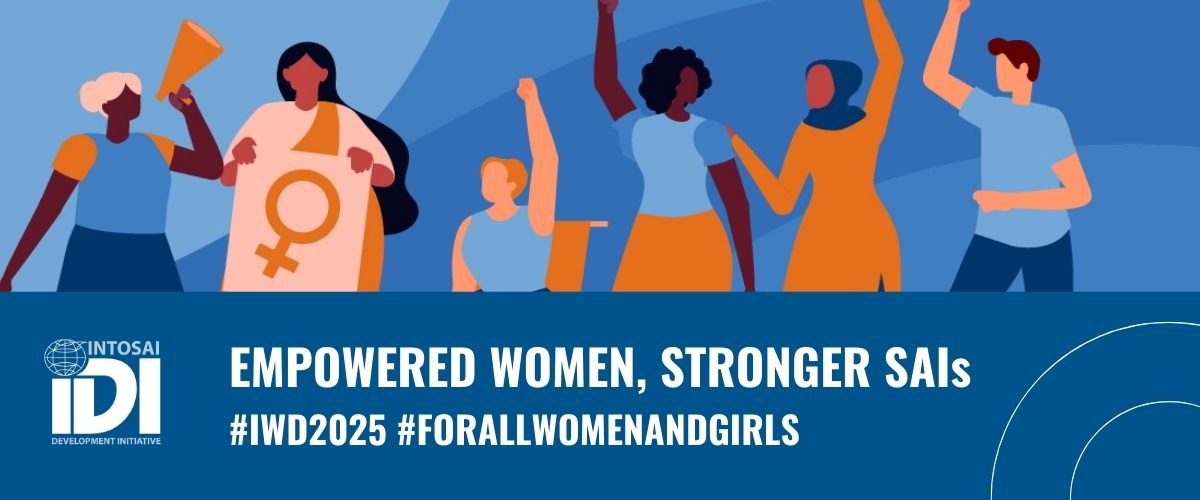
Gender equality is at the heart of a peaceful, prosperous and sustainable future for everyone, everywhere. Over many decades, progress on women’s and girls’ rights has laid the foundation to gender equality and inclusion in many parts of the world. For example, today, more than 100 countries track budget allocations for gender equality.
Gender equality benefits all societies, not only women and girls. At a global level, the 2030 Sustainable Development Goals (SDGs) will only be achievable if we ramp up support for gender equality.
And yet, some governments are reversing efforts on gender, diversity and inclusion. Many people, including women and girls, have been left behind during Covid-19, in the climate and economic crisis and in conflicts[1]. In an increasingly polarised world, ‘anti-gender’ movements try to affect institutional, legal and policy frameworks.
This year’s theme for International Women’s Day is “For ALL women and girls: Rights. Equality. Empowerment.” 2025 is a pivotal moment in the global pursuit of gender equality and women’s empowerment. It also marks the 30th anniversary of the Beijing Declaration and Platform for Action.
To advance rights for ALL women and girls is now more important than ever – for gender equality, for sustainable development and for a better tomorrow. Supreme Audit Institutions (SAIs) contribute in their countries. They can make a difference. SAIs can hold governments accountable for their efforts in advancing gender equality.
How SAIs address gender equality – a global picture
The INTOSAI Development Initiative’s (IDI) triennial Global Surveys and Global SAI Stocktaking Report 2023, show that SAIs have become more gender-sensitive in some areas.
At the SAI Governance level, more than 60 per cent of SAIs say they have institutionalised gender responsibilities to some extent.
Of particular interest, in 2023:
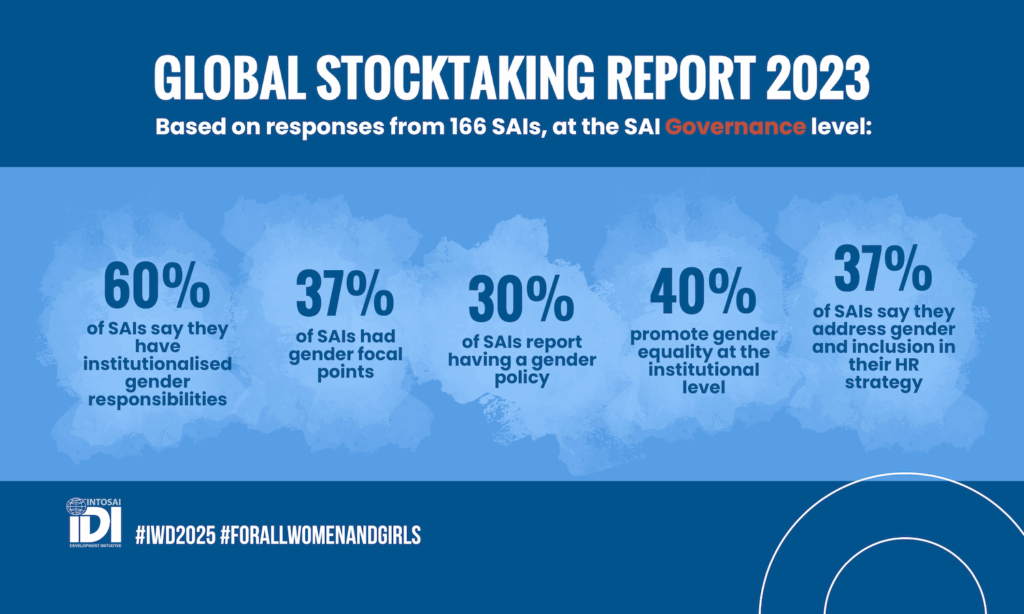
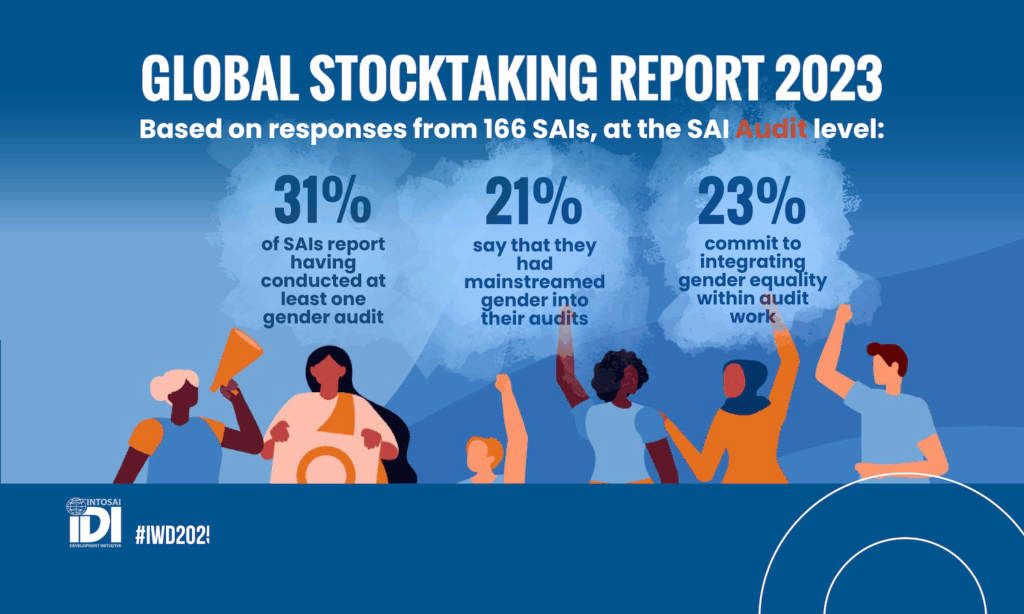
At the SAI audit level, 31 per cent of SAIs report having conducted at least one gender audit and 21 per cent say that they had mainstreamed gender into their audits. By applying a gender lens in their audits, SAIs can reflect and assess the needs and voices of women, girls and marginalised groups and make a difference in people’s lives. They can lead by example as an institution and live up to the spirit of INTOSAI Principle 12 on the value and benefits of SAIs. Global Surveys and Stocktaking results show more SAI engagement, but there is still a way to go.
How IDI supports SAIs on gender equality and inclusion
IDI is looking at ways to continue building momentum on gender equality and inclusion through its work with SAIs and internally. IDI’s support is based on the very needs of SAIs on gender equality and inclusion. Here are some examples of how IDI engages with SAIs:
SAI Governance:
SAI audits:
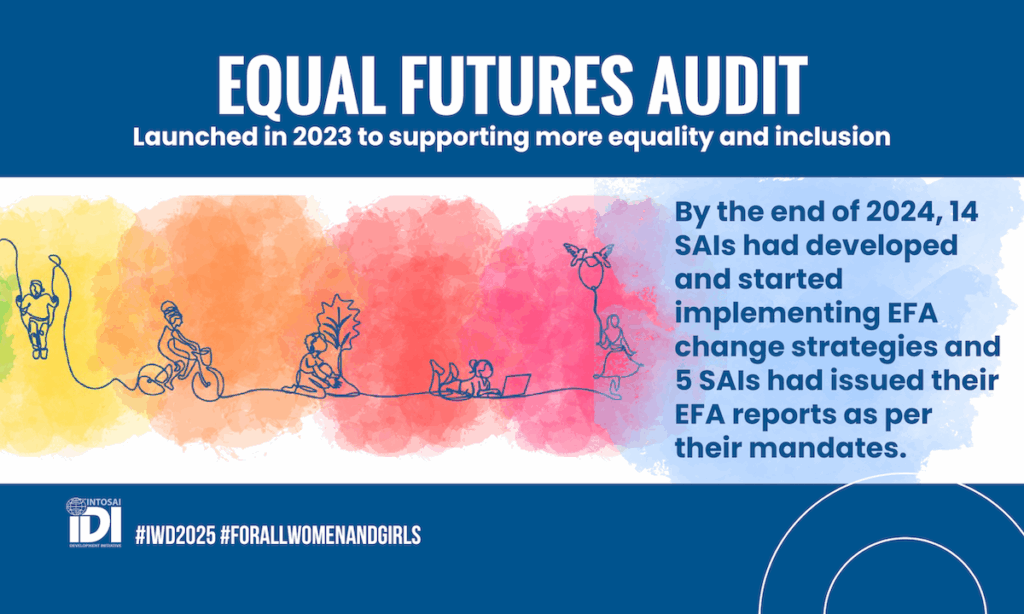
The idea is to support a pool of senior auditors to become change agents and champions for integrating equality and inclusion into SAI audits and audit strategies. By the end of 2024,14 SAIs had developed and started implementing EFA change strategies, including Brazil, Egypt, Kosovo, Mauritania and the Philippines. At the start of 2025, the SAIs of Chile, Costa Rica, Mauritania, Thailand and Uruguay have issued their EFA reports as per their mandates. Other participating SAIs are expected to complete their strategies and audit in 2025.
SAIs in challenging situations:
These are some examples showing what SAIs can do to strengthen gender equality and how IDI supports them. This support builds on IDI’s Gender and Inclusion Policy and ongoing journey. It also requires advocacy within the INTOSAI Community and SAI engagement. As we celebrate International Women’s Day on 8 March, we know that the current scale and speed of progress are insufficient to achieve gender equality by 2030[2]. In parts of the world, we even see an increased pushback against gender equality. Yet, we need to move forward, not backwards. Let’s advance together. Now is the time.
See here IDI’s short video on Equality Matters.
[1] See here a link to UN Women policy briefs also looking at the negative impact of Covid-19 on gender equality and here how climate change and gender inequality are connected. Please refer also to the UN Women’s Rights in Review 30 Years After Beijing report.
[2] See also the World Economic Forum’s Global Gender Gap Report 2024.
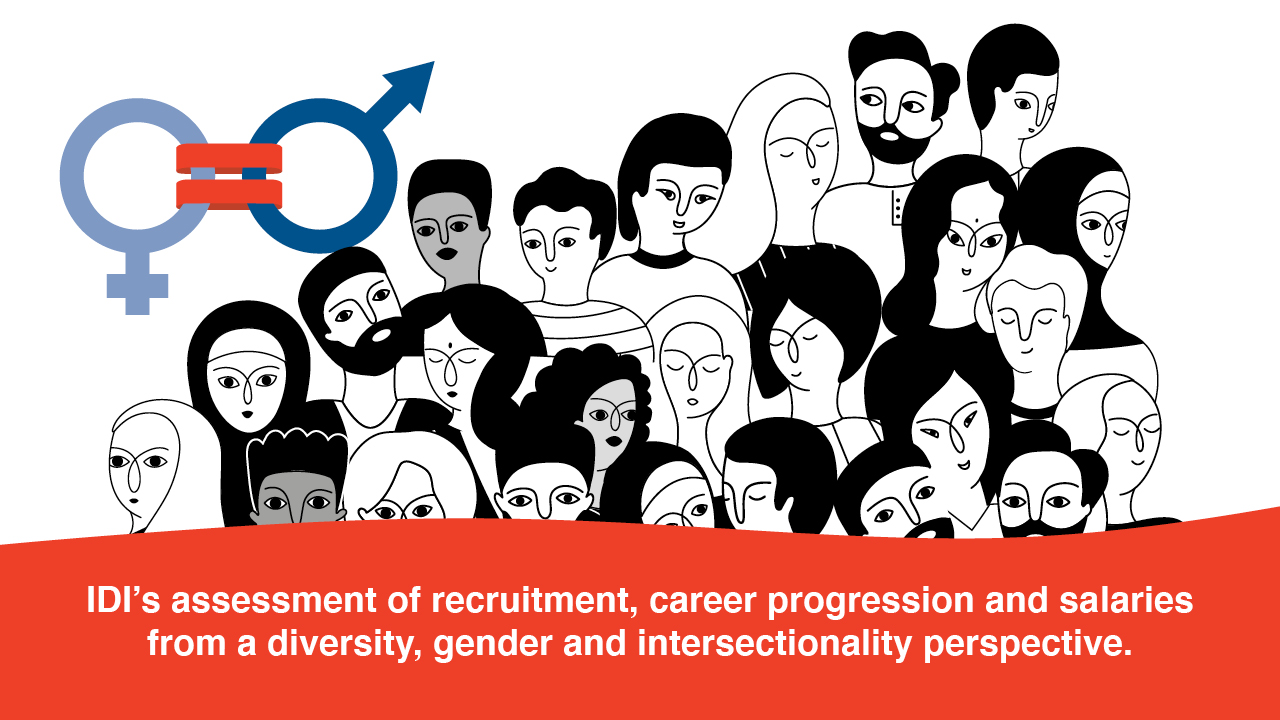
Findings of an external assessment of gender and diversity dimensions of IDI’s Human Resources management show that IDI is on the right track. IDI staff generally perceives IDI as an organisation committed to gender equality and inclusiveness and a great place to work.
Diversity, gender equality and inclusiveness pay off
More diversity, gender equality and inclusiveness equals better balanced and sustainable societies throughout. To contribute to this credo and to be credible as an organisation and in your work, you have to start with yourself. In IDI, leading by example on gender equality is one of our two strategic priorities of our Gender Strategy. We also know that diversity of thought and being inclusive results in better decision-making and performance. Studies show that employees working in companies that take equality and inclusiveness seriously are less likely to leave.[1]
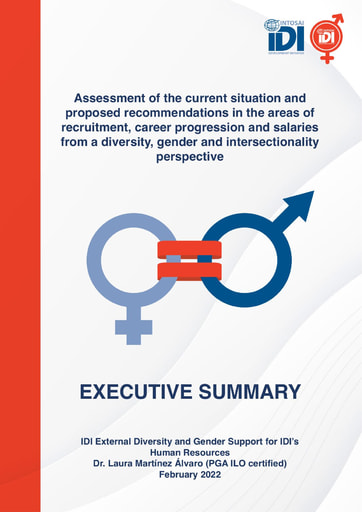
We have come a long way on our gender journey in IDI, but we also know that there are always ways to improve. This is why we commissioned an external assessment to look into whether gender and diversity dimensions are adequately addressed in our human resources management, with a specific focus on recruitment and hiring, career progression, and salaries.
How did we assess?
An external expert on gender and diversity started the assessment in November 2021. This is timely as findings and recommendations can ultimately feed into developing IDI’s next Strategic Plan. The methodology used draws heavily on the International Labour Organization (ILO) Participatory Gender Audit (PGA) designed to support organisations’ approach to gender equality and adapted to include diversity issues. The assessment collected both objective and subjective data. More than 50 relevant documents were reviewed during a desk review in November. This was complemented by an online staff survey, interviews and workshops.
Findings and recommendations
Focusing on HR processes for recruiting and hiring, career progression and salaries, the assessment produced an internal report with the following findings:
IDI is perceived as a highly reputable employer and great place to work with a friendly environment and good work/life balance. IDI shows strong commitment and efforts to further improve gender and diversity dimensions in recruiting and hiring. Staff recognises IDI efforts to mainstream gender equality and diversity in the organisation. The assessment welcomes IDI’s ongoing work to develop a competency framework to support recruitment and career planning and efforts to avoid gender pay gaps.
Recommendations include among others a call for
For further details of the findings and recommendations see the publicly available executive summary .
We will take up recommendations and work together with IDI staff to develop a tailor-made action plan for implementation.
For further information on our work and framework on gender and inclusiveness, please visit our Gender and Inclusiveness webpage.
[1] See for example: Muhammad Ali, Isabel Metz, Carol T. Kulik, Retaining a diverse workforce: the impact of gender-focused human resource management, Human Resources Management Journal, Volume 25, Issue 4, p. 580-599 and a report done by Catalyst that found companies with higher gender diversity management had 35% better return on equity: Catalyst, The Bottom Line: Connecting Corporate Performance and Gender Diversity, 2004, https://www.catalyst.org/research/the-bottom-line-connecting-corporate-performance-and-gender-diversity
Gender equality is necessary for flourishing societies and growing economies, and its positive effect has been proven by research.
Camilla Fredriksen, Einar Gørrissen, Siri Hellevik, Alain R. Memvuh Lindouyou, Petra Schirnhofer, and Tonje Fremstad- Waldron, INTOSAI Development Initiative (IDI)

Gender equality is necessary for flourishing societies and growing economies, and its positive effect has been proven by research. For example, according to the Norwegian Ministry of Finance, if women participated in the country’s labor market at a lower rate—specifically, at the average rate for industrialized Organization for Economic Cooperation and Development (OECD) countries—then Norway would lose the equivalent of the value of the entire Government Pension Fund Global, one of the world’s largest funds.
It is therefore in the interest of all countries to ensure everyone has equal rights and opportunities. Gender equality and women’s empowerment is even a specific United Nations Sustainable Development Goal (SDG 5), one that cuts across all sustainable development. Yet, to date, no country in the world has achieved gender equality.
Furthermore, the COVID-19 pandemic has exacerbated the “shadow pandemic” of gender-based violence, economic crises, and care deficits, with disproportionate effects on women and girls. Inequalities have widened between different groups of women and men based on disability, race and ethnicity, income, age, and more.
In an effort to monitor the responses of governments worldwide to tackle the pandemic, the United Nations Development Program (UNDP) and UN Women initiated the COVID-19 Global Gender Response Tracker. The tracker
shows that many governments have taken individual positive measures to support women, girls, and gender equality, but overall, responses are insufficient and uneven. To fight poverty, enable sustainable development, and ensure fair government responses to the pandemic, we cannot neglect gender equality.
Supreme Audit Institutions (SAIs) have an important stake in this effort, as organizations and through their audit work. SAIs can make a positive mark by actively contributing to greater equality in their countries, and by making gender visible in their organizations and their audit work. SAIs can also demonstrate the costs of gender inequality. For example, gender-based violence has enormous individual and economic costs.
However, the INTOSAI Development Initiative’s (IDI) recent 2020 SAI Global Survey and Stocktaking Report, with a special Gender Annex, shows that many SAIs do not see gender equality as an important issue. Globally, gender balance among SAI staff is tilted the higher one climbs up the career ladder. In 2020, only 29 percent of SAI leaders and 39 percent of senior management were female.
Moreover, less than a third of SAIs globally have strategic plans with objectives related to gender equality, and only 10 percent inform their planning by conducting gender analysis. Globally, there is slow take-up of audits that contribute to gender equality, with exceptions such as the Organization of Latin American and Caribbean SAIs (OLACEFS) region and a number of SAIs across the globe. Furthermore, very few SAIs have developed capacities in gender equality.
Through its 2020 Gender Strategy and updated Gender Policy, IDI aims to take its gender engagement a step further. Together with other stakeholders, such as UN Women, International Budget Partnership (IBP), Association of Chartered Certified Accountants (ACCA), and the Canadian Audit and Accountability Foundation (CAAF), IDI supports SAIs in becoming more gender-responsive organizations and conducting audits that contribute to gender equality.
At the same time, IDI wants to lead by example as an organization itself. A recent effort to build equality more firmly into the upcoming INTOSAI Strategic Plan is an encouraging step.
IDI has a dedicated gender team, consisting of an IDI Gender Focal Point and four internal Gender Champions aligned with the different organizational entities. Here’s what they have to say about their work and IDI’s support for gender equality:
More Interesting Information on Gender Equality
“We all have a responsibility to shape a better tomorrow for all of us, and this includes a more gender-equal world. I am exceptionally proud of our journey on gender equality and inclusiveness, and I hope many more SAIs will join these efforts.”
—Einar Gørrissen, IDI Director General
Spotlight on IDI’s Gender Team
Petra Schirnhofer, Gender Focal Point, Strategic Support Unit
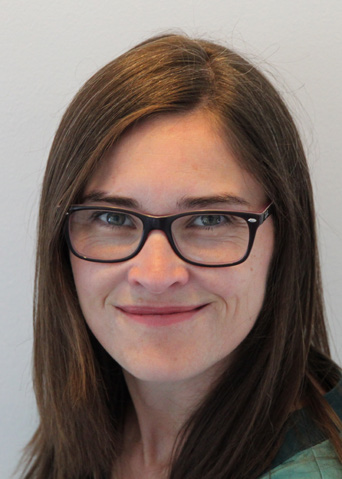
“Privilege is often invisible to those who have it. If we want a just and sustainable world, we need to take a closer look at factors such as gender, age, ability, and ethnicity that contribute to power and privilege for some but not for others. In IDI, we have embarked on a gender journey with our current Strategic Plan, and we have learned a lot so far. This includes the need to be consistent and inclusive, share responsibilities, and have the necessary capacities, allies, and supportive leadership. It has been great to lead our work on a more robust gender framework, with a new Gender Strategy and Policy. I am thrilled to see initial successes in our own organization and in our support for SAIs and their audit work.”
Siri Hellevik, Gender Champion, Professional & Relevant SAIs Department

“In order for SAIs to be relevant to all citizens and contribute to the SDG 2030 Agenda of “leaving no one behind,” it’s important to mainstream gender and inclusiveness in audits or embark upon audits that focus on gender and/or inclusiveness. As the country contexts vary among the SAIs we support, we are always seeking to find the appropriate practical angles to provide a focus on gender and inclusiveness in their specific audit work. As we move forward from our pilot activities, and as both IDI and SAIs gain more experience and lessons, we aim to expand our work on this with the Equal Futures Audit initiative, launching in 2022.”
Alain R. Memvuh Lindouyou, Gender Champion, Well-Governed & Independent SAIs Workstreams and Bilateral Support Unit
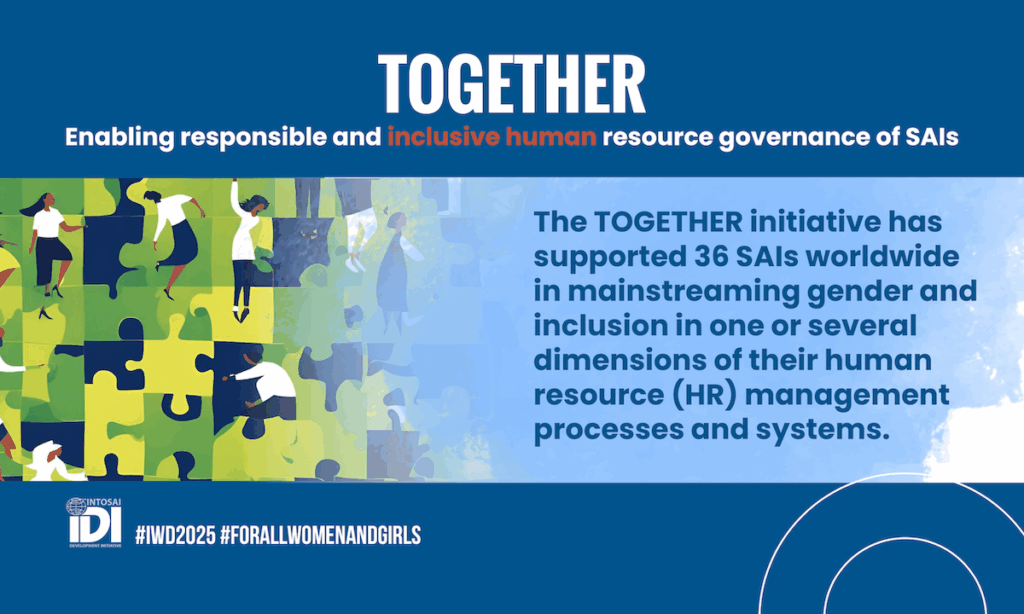
“Supporting my colleagues on applying a gender and inclusiveness lens to their work is a new and exciting challenge, with valuable learning opportunities. You get to discover perspectives you wouldn’t have considered without a structured approach. Leading by example for SAIs also means being gender responsive and considering inclusiveness. A key lesson learned for me so far is that all three areas of institutional, organizational, and professional capacities provide interesting entry points for advancing on this journey with SAIs. Our new initiative on Human Resources, Ethics and Gender for SAIs (TOGETHER), to be rolled out next year, is part of this perspective.”
Camilla Fredriksen, Gender Champion, Global Foundations Unit

”Working with the gender analysis in the Global Stocktaking Report really reminded me about the need to take gender equality seriously at the organizational level if you want to see change, especially by promoting women into leadership positions. The interesting thing about doing such an exercise is that it opens your eyes to what happens around you in your own organization and society. I’m very excited that the gender analysis has been presented as an annex to the report. In fact, it’s a small report in itself, showing INTOSAI and its partners the extent to which SAIs are working toward making their organization more gender equal and an inclusive workplace.“
Tonje Fremstad-Waldron, Gender Champion, IDI Administration
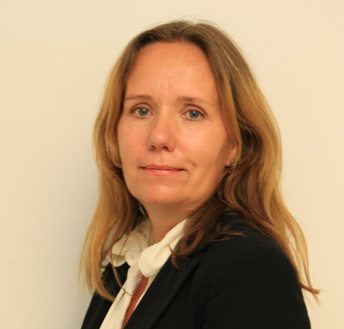
“Upholding equality in the workplace means giving people equal opportunities, equal pay, and accepting and appreciating everyone for their differences. With the support of an external gender and human resources expert, we have started to critically review our internal processes, including recruitment, career progression, and pay. This external viewpoint can reveal flaws that those inside the organization may not be able to see. As a human resource professional, it feels extremely rewarding to be part of the gender champion team, and I would encourage other organizations to designate gender focal points and champions.”
 |
To read more, click here. |
by Camilla Fredriksen, Manager, IDI Global Foundations Unit 
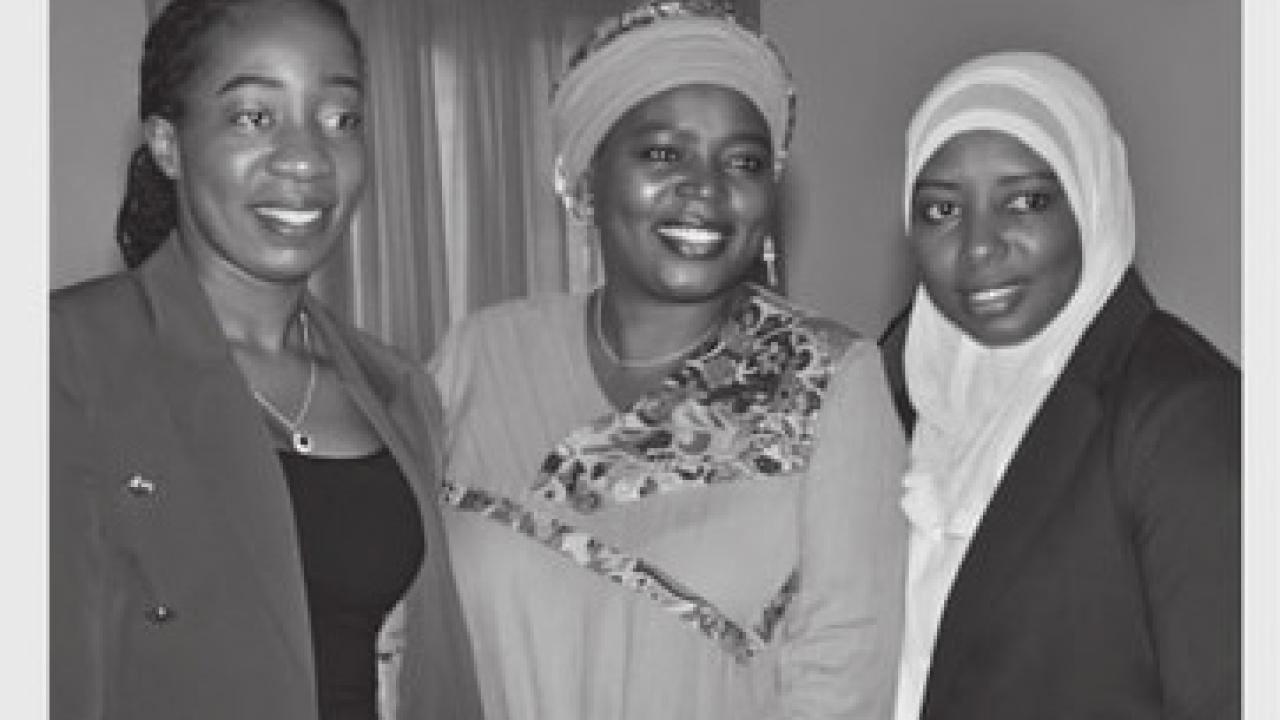
On December 10, 2021, the INTOSAI Development Initiative (IDI) launched a special Gender Annex to the Global Stocktaking Report 2020. The Annex—Towards Greater Gender Equality in and through SAIs – Opportunities for SAIs and Support Providers—examines the commitments Supreme Audit Institutions (SAIs) have made on gender, and how these commitments have translated into action.
The analysis of responses from 178 SAIs tells a story about an SAI community where the gender composition of staff is balanced, but where efforts are needed to promote women into leadership positions. Women comprise only 29 percent of Heads of SAIs, and 39 percent of senior management in SAIs.
This gap may be due to the fact that the strategic plans of fewer than one-third of SAIs include measures on gender equality. In fact, fewer than 10 percent of SAIs have undertaken a gender analysis to inform their strategic planning, which indicates that the knowledge base for identifying appropriate strategies is also lacking. The African Organization of English-speaking SAIs (AFROSAI-E) and Regional Council for the Training of SAIs of Sub-Saharan Francophone Africa (CREFIAF) regions are champions in promoting gender at the institutional level.
In terms of audits, only 21 percent of SAIs have committed in their strategic plans to integrating issues of gender into their work. Similarly, only 24 percent of SAIs undertook gender audits during the period of 2017 to 2019. The bulk of these were audits of United Nations’ Sustainable Development Goal 5 on gender equality carried out by 70 percent of the SAIs in the Organization of Latin American and Caribbean SAIs (OLACEFS) region. A meager 14 percent of all SAIs globally have started mainstreaming gender in their audits.
These results suggest there is a need to build SAIs’ capacity to improve gender equality. Yet, only 23 percent of SAIs have
committed to developing staff capacity on this issue, and fewer than 10 percent of SAIs have received capacity development support on gender in recent years.
Interestingly, many of the 25 percent of SAIs globally that plan to build capacity in gender in the coming period are from the AFROSAI-E, CREFIAF, and OLACEFS regions. This tells us that SAIs already doing work on gender more clearly appreciate that, if they are to become more gender responsive, they will need to systematically develop capacity across their institutions.
| |
To read more, click here. |
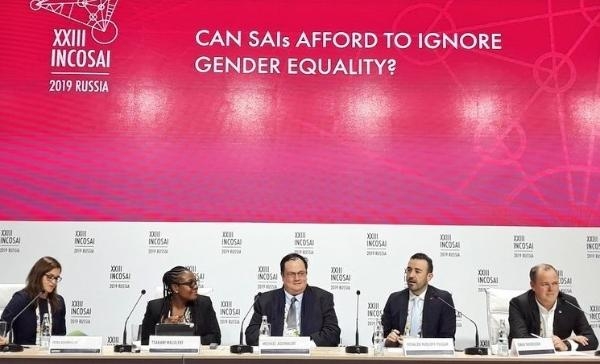
IDI hosted a panel discussion called “Can Supreme Audit Institutions Afford to Ignore Gender Equality” during the INTOSAI Congress in Moscow. View the discussion here. Having gender equality on its agenda was a premiere for the Congress.
“Gender Equality is a must if we want to solve the substantial challenges the world is facing”, said Einar Gørrissen, Director General of the INTOSAI Development Initiative, as one of the panellists. Supreme Audit Institutions (SAIs) can contribute to gender equality by assessing government action on gender equality and by leading by example as institutions. The panel discussion can be viewed here.
The speakers in the panel discussion included:
– Tsakani Maluleke, Deputy Auditor-General of South Africa
– Michael Aguinaldo, Chairperson of Commission on Audit, Philippines
– Osvaldo Rudloff, Executive Director of the Latin American and Caribbean Organisation of Supreme Audit Institutions (OLACEFS)
– Einar Gørrissen, Director General, IDI
Mr. Aguinaldo explained that the Commission on Audit has an automatic role to play with regard to gender equality in his country. This is due to the fact that implementing gender-responsive budgeting in the Philippines has changed the role SAIs work. Mr. Rudloff and Ms. Maluleke stressed the importance of leading by example and having role models within their own institutions. Consistent efforts, including both hard and soft controls, sex-disaggregated data, bold strategic choices and engaging both men and women, are some of the elements necessary to advance on gender equality in SAIs.
The IDI Strategic Plan 2019-2023 introduced a strategic shift towards including a gender perspective at IDI’s own organisational level and in its work. This includes a requirement to conduct a gender analysis for each new IDI initiative.
IDI will also continue to raise awareness on gender equality with Supreme Audit Institutions, INTOSAI bodies and other partners.
For OLACEFS work on gender equality, see: https://www.contraloria.cl/multisite/genero/en/