News
Growing SAI Young Leaders: The IDI Story
13/02/2022
“I saw the garden as a metaphor for certain aspects of my life. A leader must also tend his garden; he, too, plants seeds and then watches, cultivates, and harvests the results.”
—Nelson Mandela
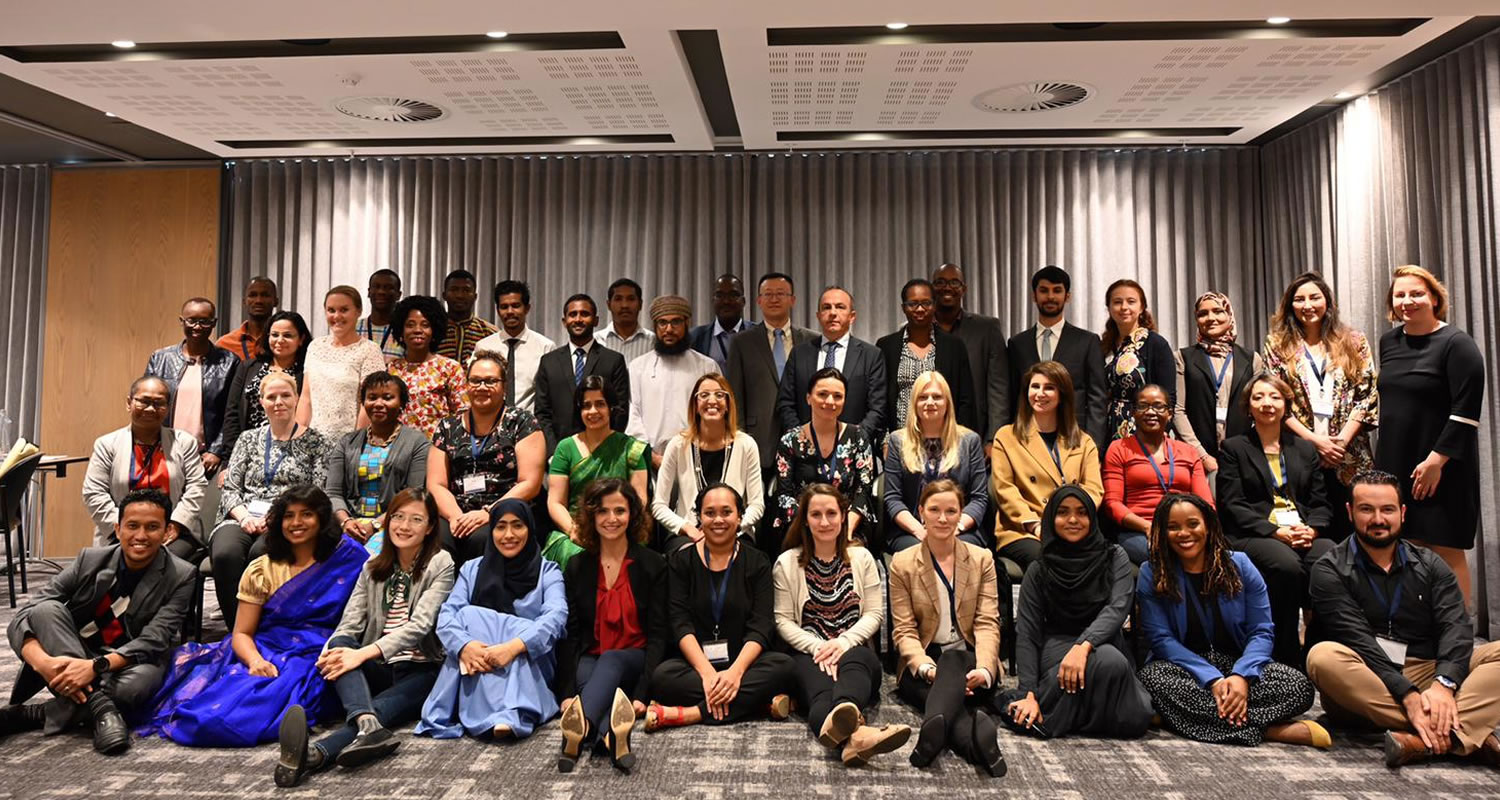
When Nelson Mandela was imprisoned, he tended his garden and spoke of throwing seeds on the ground, watering them and watching them grow. Similarly, the INTOSAI Development Initiative (IDI) has observed and nurtured young leaders from Supreme Audit Institutions (SAI) worldwide through the SAI Young Leader (SYL) initiative.
As these future leaders take the journey from seedling to blossoming tree, the SYL initiative, now in its second iteration, provides nourishment through enriching exchanges, as well as leveraging work and support from the pilot program.
Before gardeners sprinkle seeds upon the ground, they must survey the land. Time and again, IDI’s experience shows that leadership drives SAI transformation and performance enhancement. While IDI and other partners can certainly play supporting roles, leadership remains at the forefront of change.
Once the ground has been prepared, we must plant the seeds. The SYL program selection process is designed to identify candidates with the highest potential to grow and succeed. Selection also includes examining each candidate’s change strategy project (an integral component of the SYL program) having the highest likelihood for SAI implementation.
These criteria meant ensuring a SAI environment conducive to change and possessing leadership fully dedicated to the young leader, as well as the program as a whole. The IDI fulfilled both objectives through a two-stage process—assessing change strategy projects then interviewing nominated candidates.
As spring began in March 2018, IDI and the participating SAIs began nurturing and growing the select young leaders. Through an intense interactive, engaging program that included workshops, communication platforms, support from SYL coaches, and innovative evaluation methods, candidates continued learning leadership skills and perfecting their change strategy projects.
Individual responsibility combined with INTOSAI community support further cultivated young leader transformation. The many gardeners tending to the seedlings provided valuable inputs—SAI-coordinated and hosted interactions, specialists and leaders sharing personal journeys, coaches providing extensive support beyond the call of duty, and, perhaps most significantly, a network that created a climate necessary for encouragement and growth.
The inaugural young leaders established five core values, identified behaviors best reflecting those values, and endeavored to hold one another accountable for them. They also introduced the “SYL Digital Yearbook” to capture experiences, memories and achievements on the personal journeys of discovery and change.
As autumn nears, a gardener takes stock of progress and seeks to uncover key ingredients to his flourishing crop. As IDI reflects on the SYL initiative and the young leaders born from the pilot program, there is an enormous sense of pride at the blossoming trees that have taken root.
Twenty young leaders completed the first iteration of the SYL program and developed change strategy proposals on a wide variety of topics—including communications, digital solutions, data analytics employment, value chain reporting—that have already impacted SAI capacity and performance.
Some ideas and experiences have also been published (SAI Malta Unveils Audit Smart; SAI Estonia Shares Stakeholder Engagement Strategies), enabling broader outreach to the global accountability community.
To motivate SYLs in change strategy implementation, the IDI will present the “Best Change Initiative” award at the XXIII INTOSAI Congress in Moscow to the young leader who demonstrated the highest level of innovation, impact, quality, inclusiveness, personal growth and community values.
Fallon Stephany Arias Calero from SAI Costa Rica earned this year’s award for her innovative change strategy on design thinking, which has profoundly impacted the SAI—Fallon developed design thinking methodology, trained a design thinking team, and facilitated a design thinking audit approach while displaying significant leadership growth.
A gardener can never rest, and when spring comes, it is time to plant a new garden. Twenty-five seedlings were selected in March 2019 to represent the new crop of SAI young leaders.
They began the SYL journey in Cape Town, South Africa, in May, and are already benefiting from the fruits of the pilot program, as previous graduates extend support and provide valuable lessons learned.
by Tytti Yli-Viikari, Auditor General, SAI Finland, and SAI Young Leader Coach, Mentor
Just before the turmoil and havoc, the sea was translucent and calm. Soft sounds of oars diving in the water—pushing a wooden boat smoothly forward—were in unison as a team of men rowed toward the shy promise of sunrise. Seconds later, the Sampo, a magical machine that could create riches, was lost forever as it slipped into the sea that now rolled and roared.
This story, “The Stealing of the Sampo,” from the epic tale “Kalevala,” has left a cultural footprint on Finnish society. Perhaps the Sampo could allow today’s young auditor to easily master challenging, emerging topics—employing data analytics, ensuring Sustainable Development Goal (SDG) policy coherence, applying design-thinking to audits, enhancing stakeholder relations, ensuring audit work independence and quality. However, no such magical machine exists, so we must come together as a professional community and build new competencies to tackle such issues.
I had the honor to evoke the Sampo with the first cohort of IDI SAI Young Leader candidates, where I observed a journey that required determination, courage and a strong belief in one’s ability to turn challenges into opportunities. I witnessed a group of bright minds, warm hearts and inspired audit professionals grow—as persons, as well as a network.
As the one-year program came to its end last October, I was touched by the magnitude of a common path and its impact—the young leaders had been transformed, and they exuded empowerment, positive self-awareness and joy. They supported each other, valuing the chance to reflect on leadership skills and openly share lessons learned.
The change projects they were charged with writing as part of the program compelled their respective institutions to discover and share new ways of thinking and working. Coaches encouraged similar participation and outreach efforts in what was clearly a change-making journey.
The SYL program contributes to my strong belief in the future of public audit. The operating environment, methods and stakeholder expectations are rapidly changing, but our young leaders give us a great source of inspiration. Personal leadership journeys link peers to experimentation and change, and such exposure to global challenges brings about a wider understanding and incorporates enthusiasm from a community of change leaders.
Let us welcome the next generation of IDI SAI young leaders, who cultivate the future of public external audit by working together, discovering the INTOSAI community, and sharing insights in transforming challenges into opportunities.
The treasure they gain will not disappear when storms come—it carries on in their hearts and minds and is shared by alumni eager to cheer them on!
“The SYL Program, one of the best development programs I have experienced, provides a holistic approach that includes all facets of leadership.
Through the program, I completed a project from concept to implementation and was able to share it with other teams. It was an empowering, eye-opening experience, as the challenges I faced helped me exercise knowledge and skills and helped me grow in my leadership journey.”
—Seolebaleng Nkhisang, SAI Botswana
2018 SAI Young Leader Graduate
“There is a Chinese idiom that weaves the tale of a group of blind men touching an elephant for the first time. Each touch results in a completely different answer in describing an elephant. Before this project began, I was like one of the tale’s blind men—not knowing what I would learn and experience.
Though the young leaders are from different countries, different backgrounds and different cultures, we have similar expectations—seeking growth and change. As we met for the first time in Cape Town, perhaps we hoped to touch the elephant exactly as we envisioned. Yet, much like the tale, communicating, cooperating and coordinating with others was key, particularly as personal observations tend to have limited data and biased interpretations.
I am confident to continue the SYL journey with my peers and with the help and guidance from IDI and inspirational INTOSAI leaders to further explore the “elephant” (change and transformation).”
—Boyuan Su, SAI China
2019 SAI Young Leader Candidate
Visit http://intosaijournal.org/inform-consult-involve-collaborate-empower/ for the full article.
The International Organization of Supreme Audit Institutions (INTOSAI) Development Initiative (IDI) recently launched the Supreme Audit Institution (SAI) Young Leaders (SYL) program geared toward enabling the growth of young leaders and spurring them to contribute toward SAI development through specific initiatives.
As part of the SYL program, Dr. Rebecca Vassallo, Principal Auditor with SAI Malta, is currently undertaking a project designed to establish and integrate data analytics into SAI Malta’s audit functions.
Under the supervision of Mr. Keith Mercieca, SAI Malta’s Assistant Auditor General, and with senior management support, the project—#AuditSmart—will improve audit efficiency, effectiveness and coverage.
Data analytics will be used to augment analysis, allowing for population-wide testing and profiling, smarter non-statistical sampling (when full population testing is not possible), as well as the use of automated and repeatable analytical processes. Envisaged as a useful tool in audit planning, data analytics will also focus on risk-based areas of interest and anomaly identification, resulting in more meaningful analysis and objective sampling.
A data analytics team has been created, drawing on resources from across the SAI. The team, operating in a functional and decentralized manner, is comprised of analysts who are embedded in each unit. The Maltese National Statistics Office conducted technical training sessions in April 2018, and the data analytics team has commenced planning future audit work that employs data analytics as primary audit techniques.
One planned audit will assess social assistance beneficiary eligibility by compiling corresponding income and asset profiles using multiple government data sources and drawing out inconsistencies. Another audit seeks to flag possible income tax evasion cases by examining motor vehicle registration and licensing. Both audits will:
Capitalize on the rich data available to government;
Link data from various sources; and
Allow for population testing, enabling a more comprehensive and systematic review.
The #AuditSmart project also aims to perform exploratory studies with key external stakeholders to assess readiness of the audit environment and identify current data limitations, as well as areas that require active management and long-term intervention from the SAI.
The SYL program is contributing to #AuditSmart by imparting relevant theories and best practices on managing and implementing this initiative, sharing experiences and creating networking opportunities with subject matter experts.
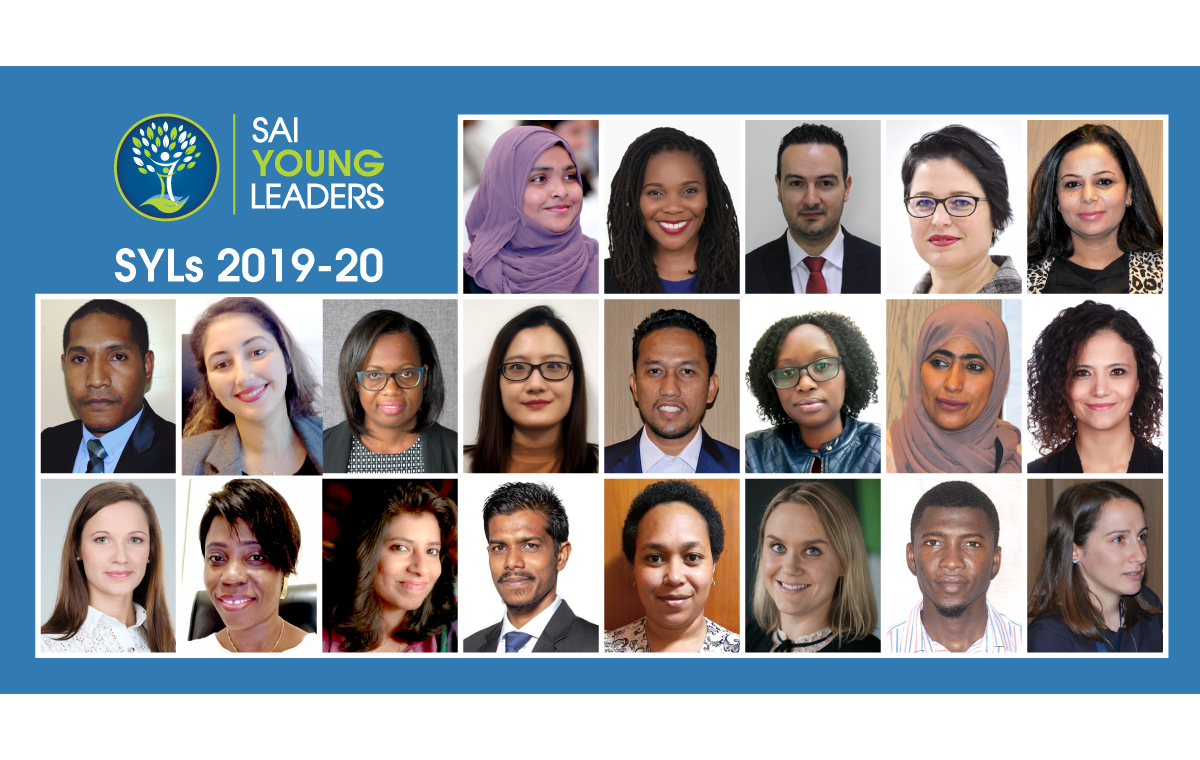
IDI is delighted to announce that 21 participants from 17 countries successfully graduated from the SAI Young Leader (SYL) initiative.
Throughout the initiative, the SAI Young Leaders focused on both their own development and change strategies for bringing about positive change in their SAIs. They each developed an integrated change plan that incorporated a coaching plan, an exposure plan and a ‘Me’ plan, in addition to the change strategy they implemented in their SAIs.
In December 2020 the 21 SYLs who had successfully met the implementation milestones and completed the education made a presentation to IDI, their peers and SAI management on the implementation of the integrated change strategy. They outlined the successes and challenges that they had faced both personally and professionally.
We were proud to see SYLs demonstrate resilience and flexibility in responding to the changes in their environments. Their reflections during the final presentations showed that the SYLs had been supporting each other as a community despite interacting only virtually during 2020.
SYLs implemented change strategies in the following areas: Effective communication and stakeholder engagement; High Impact SAI Audits; Enhanced SAI Performance and Capacity; Leverage on Technological Advancement and Strategy for Reporting on the Implementation Status of Audit Recommendations. The successful SYLs and the focus of their change strategies are outlined below.
The successful SYLs and their SAIs have been informed of the graduation. All successful SYLs will be invited to apply for the SYL Awards later in 2021.
IDI will offer the initiative again in 2021-2022 to find out more about the initiative and to register for further information please see here.
Watch out for these rising stars in SAI Leadership.
|
SAI |
SAI Young Leader |
Change Strategy |
|
|
|
First name
|
Last name
|
|
|
Botswana |
Malebogo Sanah |
Mogapi |
Development of guidelines for quantitative data collection and processing: Enhancing the use of quantitative data collection and analysis in performance audit |
|
Costa Rica |
Erick |
Alvarado Muñoz |
Use of the GROW model and other coaching principles in the audit process to generate changes and promote efficiency through the empowerment of public officials |
|
Estonia |
Kristiina |
Visnapuu |
Developing an audit follow-up system for the National Audit Office of Estonia |
|
Fiji |
Makereta |
Dyer |
Fostering Information Security Through the Establishment of a Robust Organisational Information Security Policy |
|
Finland |
Outi Elina |
Jurkkola |
Relevant SAIs – SDGs in NAOF’s Action Change Programme |
|
Hungary |
Bettina Szandra |
Martus |
Broaden our Horizon – New Method of Risk Based Audits as a Capacity Development Tool |
|
India |
Stefi |
Sofi |
Strategy for Audit of Targets Under SDG 14: Life Under Water |
|
Jamaica |
Kelisha |
Salmon |
Measuring SAI Performance: A Compass for Change |
|
Jamaica |
Nicaria |
Stewart |
Rise with Me SAI Jamaica – Committed to Information Security |
|
Kosovo |
Qëndresa |
Mulaj |
Three Elements Strategy – Communication, Impact and Integration |
|
Liberia |
Obelia P. |
Kofi |
Strategy to Enhance GAC Audits’ Recommendations Implementation |
|
Malaysia |
Mohd Nazim Mat Siam |
Selecting Performance Audit Topic through Big Data Analysis |
|
|
Maldives |
Rauhath |
Hussain |
Reaching out to Citizens |
|
Maldives |
Abdulla |
Shahid |
Audit Quality Upheld by Keeping up with Evolving Environment |
|
Oman |
Huda Said |
Al Wahaibi |
Staff Development System |
|
P. R. China |
Su |
Boyuan |
Promoting Thematic-oriented audit methodology in Real-time Audit of the Implementation of Major National Financial Policy Measures |
|
PNG |
Raymond |
Veratau |
Performance Management |
|
The Gambia |
Abdourahman |
Badjie |
Developing a Management and Task Time Allocation System |
|
Tunisia |
Mounira |
Snoussi |
Enhancing the quality of reports, to more relevant and professional audit results |
|
Tunisia |
Linda |
Mzoughi |
Follow up reports to maximize the added value for stakeholders |
|
Turkey |
Emine |
Ersöz |
Developing an Efficient Communication Strategy |
| For more information on the SAI Young Leaders initiative click here. |  |
 |
The National Audit Office of Estonia (NAO) signed a new agreement with the INTOSAI Development Initiative (IDI) for continued support to IDI’s Young Leaders Initiative in Supreme Audit Institutions (SAI).
It is the second funding from NAO for this successful IDI initiative.
Nurturing Young Leaders
SAI Leadership is widely recognised as an effective moving force, which can positively transform a Supreme Audit Institution. Einar Gørrissen, Director General of IDI knows from first-hand experience that “Supporting SAIs in sustainably enhancing capacities and performance is impossible without SAI leadership driving positive change. In light of this, the SAI Young Leaders Initiative aims to nurture young leaders, to enable their own growth and contribute to positive change of their SAIs.”
25 candidates were selected for the current round of SYL based on pre-determined criteria. As part of the SYL initiative, each young leader will develop and implemented a change strategy as a positive contribution to the development of his or her own SAI. The young leaders have face to face international and online interactions as part of the initiative.
Building on past success
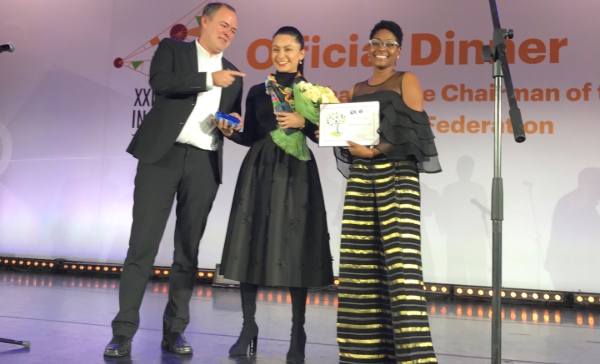
The INTOSAI community showed enthusiastic support for the pilot of SAI Young Leaders (2018-2019). The pilot saw an unprecedented completion rate of 90% successful young women leaders (18 out of 20 SYLs were women). The SYL initiative has a strong focus on women in leadership positions. In September 2019, IDI handed out a first SYL award to a female Young Leader, Fallon Stephany Arias Calero from SAI Costa Rica, selected by a panel of judges.
In light of the support and results, IDI started the second round of SYL in 2019.
Read more about SAI Young Leaders here.
| For more information on the SAI Young Leaders Programme click on the banner. | |
|
Background to the SAI Young Leaders Initiatives.
Leadership is a key driver of change and strong and effective Supreme Audit Organisations across the world. The INTOSAI Development Initiative has realised during its work of supporting SAIs that strong leadership is also key for the success of its engagement. Leadership is indeed an issue cutting across all of IDI’s workstreams and initiatives. In light of this, IDI saw a need to develop and support young leaders that would be important for the future and success of each SAI.
IDI launched the SAI Young leadership programme in 2017. 91 SAIs were invited to participate. In the end, 25 applicants were selected out of which 20 young leaders completed the programme in 2018. Over a period of 12 months, these young leaders have been exposed to a comprehensive learning process which enabled them to discover themselves, discover their SAIs and its environment, learn how to develop their people and add value to their SAIs. A number of SAIs from the INTOSAI community contributed valuably to the development of these young leaders. They met INTOSAI leaders and visited SAIs like US GAO and international institutions like the United Nations and the World Bank. Each young leader developed and implemented a change strategy, as a positive contribution to the development of their SAI. We are impressed to see how each participant in the programme blossomed both as individuals and as future SAI leaders. We are also delighted to see the positive impact that their change strategies created in most SAIs.
Both SAI young leaders themselves and SAIs valued the first round of the IDI SAI Young Leadership (SYL) programme. Currently, IDI is implementing a second round of SYL to which all SAIs were invited and trying to implement the lessons learnt from the first round.
SAI Young Leaders Award;
The 20 SYLs who completed the programme were invited to apply for the SYL Award. In order to apply they had to prepare a letter of application, a piece of reflective writing on the change strategy that they had implemented and personal skills they had gained and provide a recommendation from their Head of SAI. There were 9 applications for the award. The IDI invited a panel of judges Ms Pamela Monroe ( AG SAI Jamaica and IDI Board member), Mr James-Christian Blockwood (Managing Director Strategic Planning and External Liaison U.S. Government Accountability Office) and Mr Einar Gørrissen (Director General IDI) to judge the award.
The applicants for the award made a presentation and answered questions from the panel. The judges evaluated applications using the following criteria: impact, innovation, quality, inclusiveness and personal effectiveness. The award was made to Fallon Stephany Arias Calero for her SAI Change Strategy ‘Innovative approach in comprehensive audit services to increase public value (design thinking)’. Through implementing this change strategy she developed design thinking methodology for SAI Costa Rica. She also trained a design thinking team and facilitated use of design thinking approach in audit.
SYL Programme – Fallon Stephany Arias Calero
The SYL programme was an incredibly challenging and transforming process. It gave me the opportunity, tools and guidance to grow as a leader, as a professional and as a person. The transformation was based on the process of self-discovery and the identification of my strengths, leadership style, motivation and also the specific abilities that I still need to built or keep growing to strengthen the my leadership skills.
Taking part in the programme also gave me the opportunity to know and experience the different perspectives and realities on which the other SAIs work and develop their competencies. Thanks to the participative environment on which the programme was executed, I discovered and explored the knowledge, experience, trends, good practices and overall landscape of the SAIs from my region (OLACEFS) but other regions as well. I believe that one of the most enriching experiences of the programme was the possibility for all the SAI Young Leaders to shared their knowledge, struggles and information with the guidance of IDI facilitators, the other SAI leaders and our coaches. It taught me the value and importance of building networks and working together.
The other big lesson learnt of the programme was to understand the leader’s responsibility to impulse and impact the life of others, helping them on their own process of discovery and growth. Today I feel exited and proud to recognize my capacity to empower others and be a positive influence in their lives.
The SYL Programme was indeed, in my case, a process of profound transformation and awareness on which I received the impulse to take next step on my career. Now I get the chance to create value for my country through my new leadership role in my SAI from where I’ll keep and will continue my journey of self-discovery and recognition as a leader.
Fallon along with Carla Ribeiro da Motta from SAI Brazil will present a webinar on design thinking in the audit process as apart of the Green Hat Innovation Exchange series later this year.
Read more about SAI Young Leaders here.
IDI invites bids for the contract to develop and deliver emotional intelligence and coaching skills education.
This SYL initiative provides leadership education to SYLs working in SAIs. The initiative will contain two international interactions and online education between the interactions. The first interaction is in May 2019 in Cape Town South Africa. To apply before the 15 April deadline and for detailed information click here.