

Forty Years of IDI and the Partnerships That Made It Possible
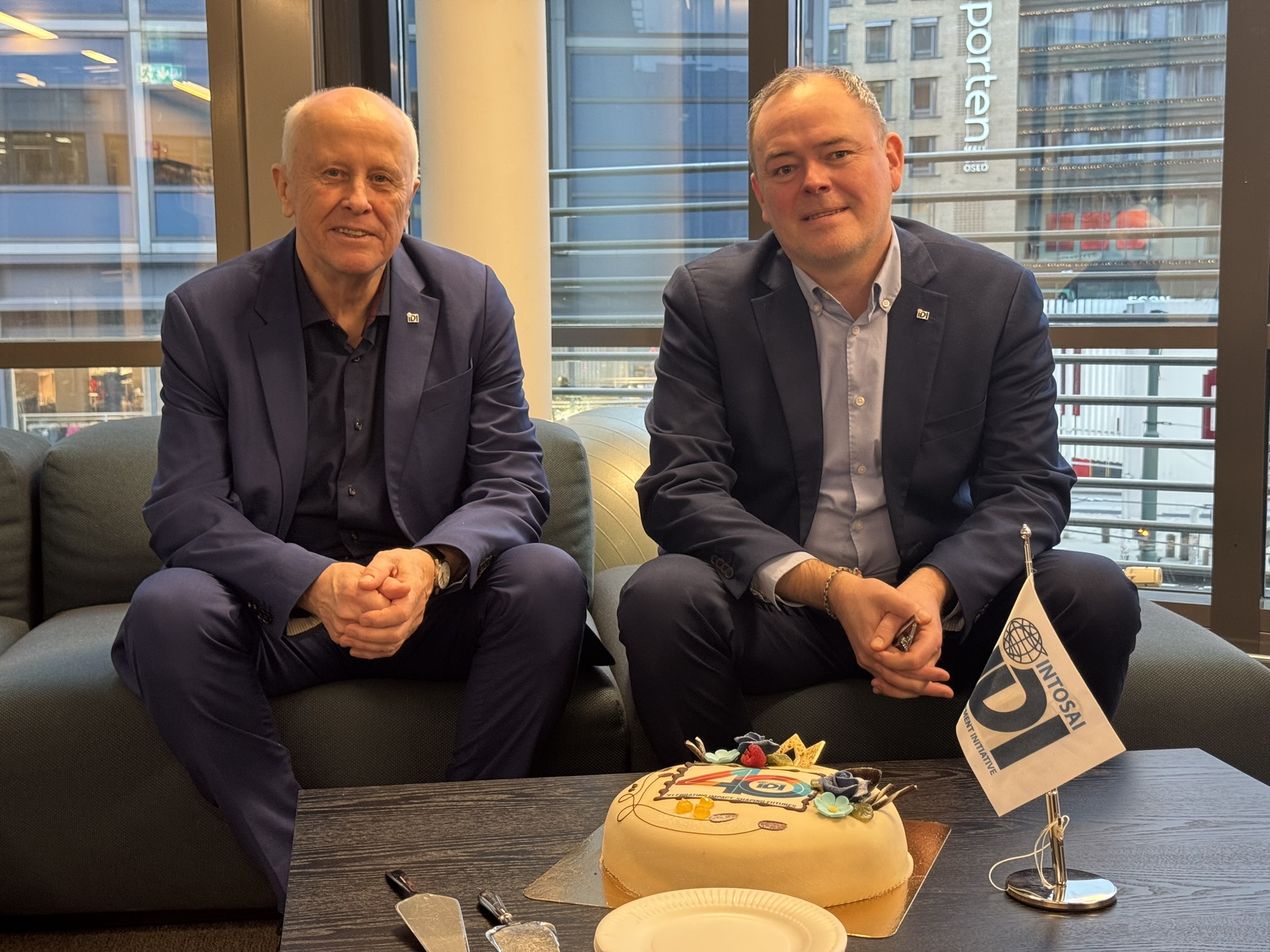
Forty Years of IDI and the Partnerships That Made It Possible
In a time of constant change, where geopolitical challenges, a changing climate, and increasing uncertainty in the world order are all prevalent, it can be difficult to find positive elements – the silver linings to otherwise grey clouds. But here we are: the INTOSAI Development Initiative (IDI) is celebrating its 40th anniversary this year. We have over theses 40 years supported Supreme Audit Institutions (SAIs) globally. Our vision continues to be independent, credible, and sustainable SAIs for better societies and improved lives.
So how did it all begin? And, perhaps more importantly, where are we going?
Early days in Canada
At INCOSAI in Sydney in 1986, the INTOSAI Board approved the resolution to establish the IDI. Its foundations are rooted in the acknowledgement that there was a strong need to support SAIs in developing countries in strengthening their performance and capacity.
When SAI Canada hosted the first technical workshops in 1986, the concept was modest, but the idea was powerful: give auditors tools they can immediately use. These workshops focused on skills — but even more importantly, they created early bonds among SAIs and focused on community. Cooperation became the norm, not the exception. This training and support would continue to build a network of SAIs – leveraging INTOSAI Regional Secretariats, working groups, and partners to build IDI’s reputation as a key resource for SAI capacity development.
Moving time: IDI transitions to Norway
In 1998, members at the XVI INCOSAI approved IDI’s move from Canada to Norway. The Norwegian Parliament approved the decision, and the IDI officially relocated to Norway in 2001, hosted by SAI Norway. It was at this time that IDI was established as a foundation in Norway with a board overseeing the organisation.
We were grateful for INTOSAI’s trust through the transition. The global SAI community demonstrated its confidence in our adaptability through this period, and we were determined to deliver results.
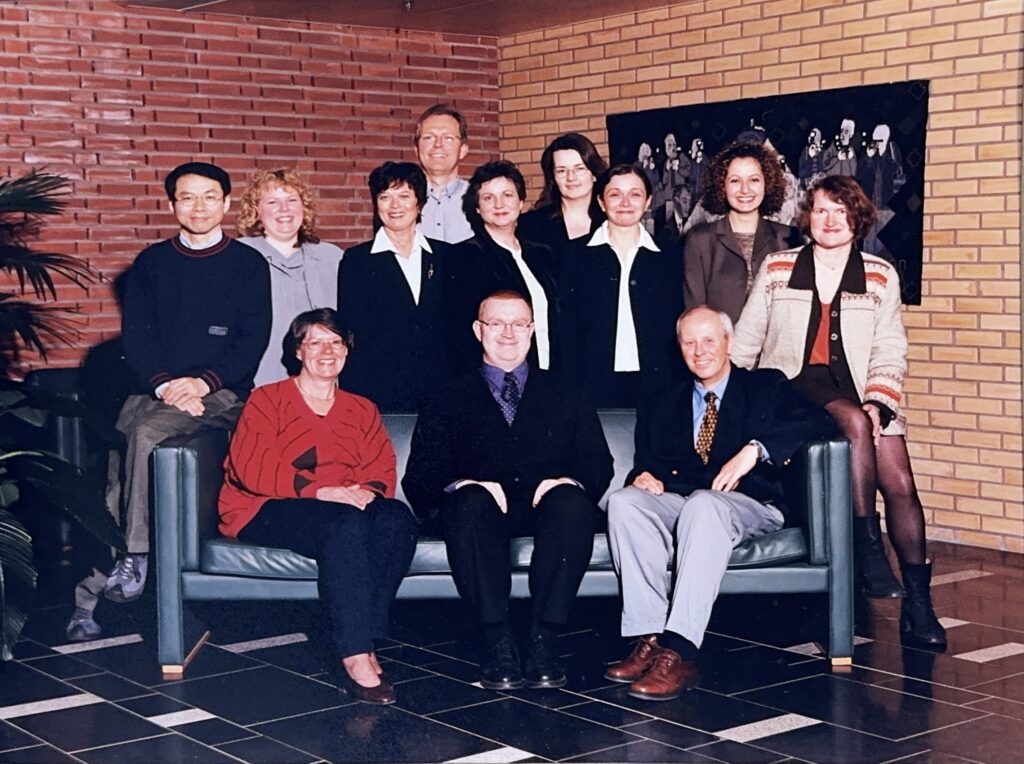
IDI in Norway, 2001-2002
Training the Trainers: An Early Lesson in Sustainability
From 2001 to 2005, we focused on long‑term training programmes for trainers. We wanted to see that our network of trainers was equipped to deliver support within their institutions and regions. The training wasn’t just capacity development; it was a declaration that SAIs could own their future. And it was made possible when regional bodies and individual SAIs stepped up. The approach was realised through workshops around the world – an early one in Norway helped build the SAI trainer community with a home visit and cultural exchange. The INTOSAI network didn’t just participate — they co‑created.
Capacity Development Grows Up
From 2005 onwards, the increased use of digital solutions in the workplace served to close trans-continental gaps and promote innovation for IDI. This period saw a transition from technical workshops to broader capacity development, including early eLearning efforts. We recognised that SAIs needed more than skills — they needed systems. At the same time, new global trends emerged – a global financial crisis, non-Western economic powers emerged, and increased instability combined with “forever wars” – contributed to increased need for strong institutions, oversight on public funds, and a focus on transparency. The conversation shifted toward how SAIs could contribute to bigger public‑sector questions.
IDC and Supporting ISSAI Implementation
Following the signing of the INTOSAI-Donor Memorandum of Understanding, we established the Secretariat for the INTOSAI-Donor Cooperation within the IDI in 2009. Key successes included the introduction of the triannual Global SAI Stocktaking Reports, the development of the SAI Performance Measurement Framework (SAI PMF) and brokering support to SAIs.
In parallel, we began to tackle some of the toughest challenges facing SAIs, hereunder supporting SAIs in implementing the International Standards of Supreme Audit Institutions (ISSAIs). This was a monumental undertaking, and our work in professionalising SAIs this area continues today. Here too, the support of SAIs and INTOSAI has been decisive, and without that collective drive, progress would have been limited.
Work Streams and Tailored Support
When we moved from programmes to work streams in 2019, the transition reflected a more integrated reality. SAIs in recent years face pressures that no training programme from the 1980s could have anticipated.
To illustrate, the following are just some of the key issues we’ve worked with together:
- UN Sustainable Development Goals — the role of SAIs in supporting SDG implementation, highlighting progress, and policy coherence.
- COVID-19 – unprecedented pressure on public finances, emergency procurement, and the need for agile audit responses from the SAI community
- SAI independence and governance — global democratic backsliding, and increased pressure on SAI independence, as well as SAIs leading by example when it comes to their governance practices
- Public debt and sustainability reporting — and most recently, we have turned our attention to support SAIs in the areas of the audit of public debt accountability and the audit of public sector sustainability reporting.
All of these areas demanded bold decisions, innovation, and trust. And once again, the INTOSAI network — regions, committees, working groups, and individual SAIs — has shown up. Our collective support for SAIs has broadened to promote and advocate for their roles in supporting democracy and in anti-corruption.
Strengthening SAIs is not a technical exercise where you train, transfer knowledge, and wait for results. Indeed, the past forty years have taught us that strengthening SAIs requires something far more complex — long‑term commitment, institutional understanding, mutual trust, and a network that believes in the mission.
A Community Effort
And as we reflect on the past forty years, one truth stands out: impact in the SAI community has never been the result of a solo operation. It has been built through partnerships, trust, and a shared belief that strong and independent SAIs are central to good governance and development. The evolution of our work didn’t happen in isolation. It happened because an entire community — the INTOSAI family — chose to stand behind it.
And for that, we thank you — our INTOSAI partners, SAIs worldwide, development partners, and every colleague, resource person, and expert who has chosen to invest their time, experience, and passion in this work.
We look forward to the next 40 years of celebrating impact and shaping futures – together.
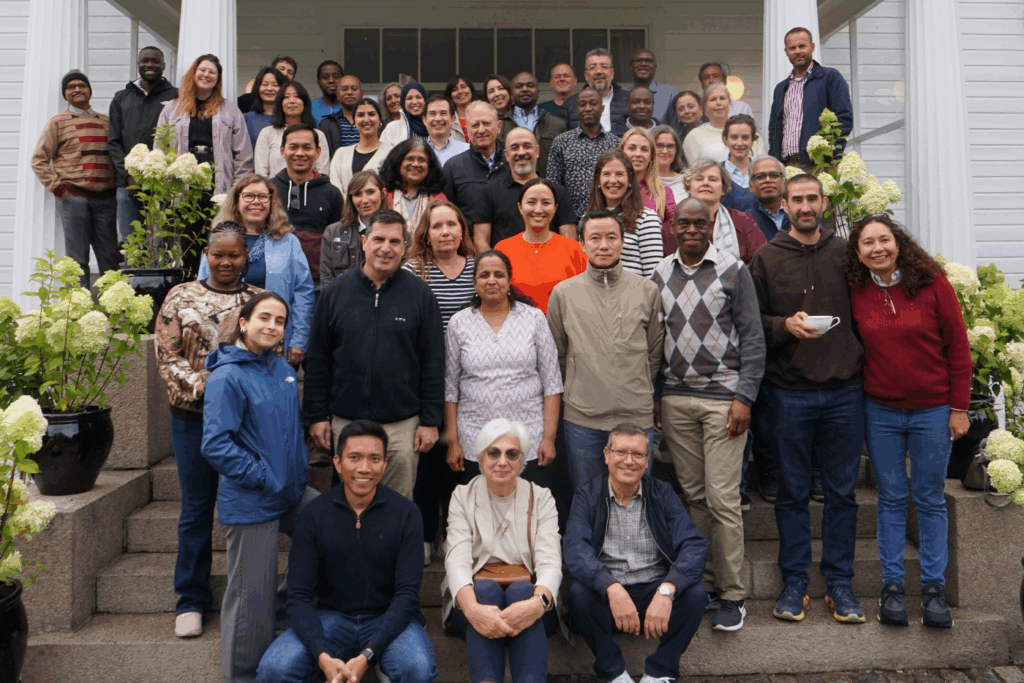
IDI Staff Meeting, 2025
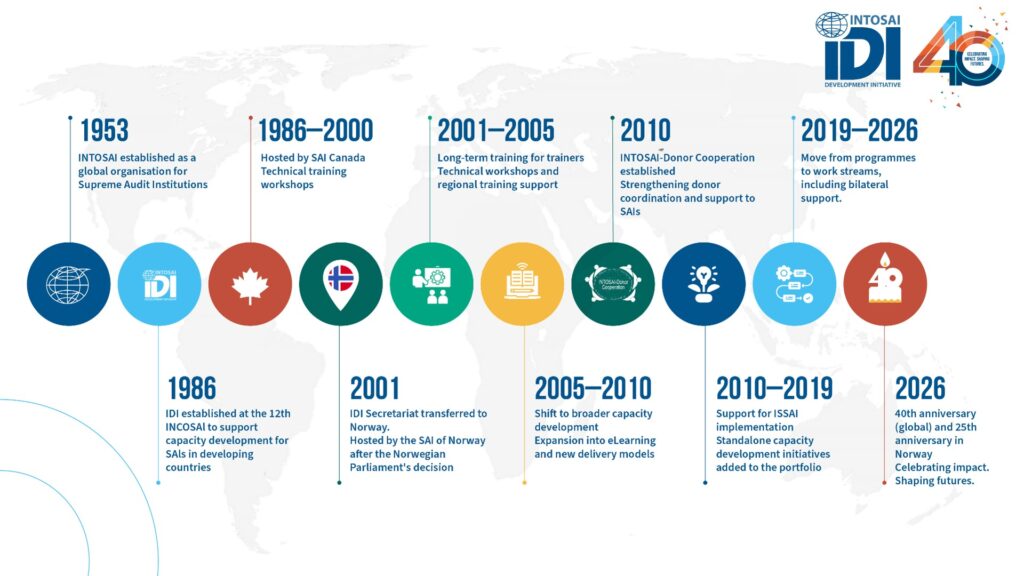
IDI timeline