News
Board approves 2022 reports and discusses IDI’s new Strategic Plan
30/03/2023
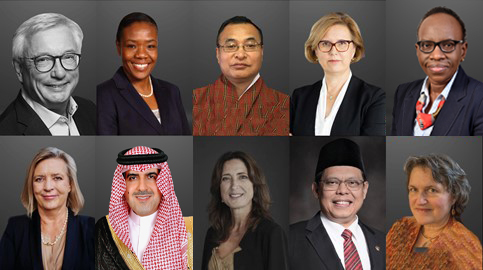
Performance and Accountability Report and financial statements for 2022 approved, and IDI’s next Strategic Plan discussed on 29 and 30 March 2023
IDI’s Board approved the Performance and Accountability Report and the financial statements for 2022 and discussed IDI’s future Strategic Plan in a two-day meeting from 29 to 30 March 2023. The Auditor-General of South Africa, who is also one of the 10 Board members, kindly hosted the meeting in Pretoria.
In 2022, IDI’s journey to support Supreme Audit Institutions in enhancing their capacities and performance in developing countries continued successfully. It was another year with strong IDI performance and many highlights, including a new record with 187 SAIs participating in IDI initiatives.
With the support of many stakeholders, including the INTOSAI and SAI community, IDI managed to achieve the vast majority of its targets for 2022. As in previous years, IDI’s external auditors also gave an unmodified opinion and positively evaluated IDI’s internal control framework.
The Board also discussed and approved IDI’s response to the Mid-Term Evaluation of the IDI Strategic Plan 2019-23. Findings and conclusions of the evaluation were positive, and IDI accepts to implement most recommendations.
Finally, the Board discussed and gave strategic directions to the draft of IDI’s future Strategic Plan 2024-29, and the portfolio linked to it.
The minutes of the Board meeting, the Performance and Accountability Report, financial statements for 2022 and IDI’s response to the Mid-Term Evaluation of IDI Strategic Plan 2019-23 as well as the evaluation itself will be published on IDI’s website.

The INTOSAI Development Initiative (IDI) is delighted to share its newly developed Guidance Note on Strategic Management for INTOSAI Regional Organisations.
The Guidance Note aims to synthesise a general strategic management framework, approach, and principles and allows regional organisations to tailor these elements to their unique contexts, needs, and challenges. It serves as a reference on strategic management for INTOSAI regions, which they can use to benchmark and improve their own governance and performance.
At the heart of this guidance note lies the Strategic Management Model for INTOSAI Regional Organisations, also known as the Regional Value Chain, which is presented in relation to the SAI value chain. The description of each stage of the strategic management process is accompanied by specific examples from the INTOSAI community.
The development of this guidance note would not have been possible without invaluable contributions from the INTOSAI Capacity Building Committee (CBC) and Regional Organisations, such as AFROSAI-E, ARABOSAI, ASOSAI, CAROSAI, CREFIAF, EUROSAI, OLACEFS, and PASAI.
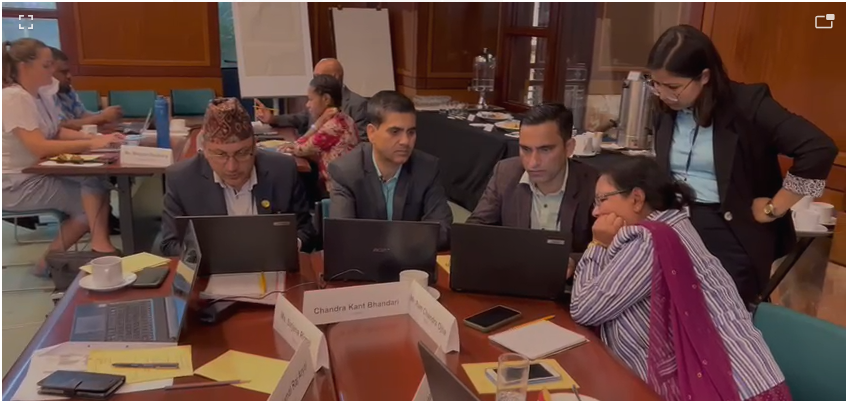
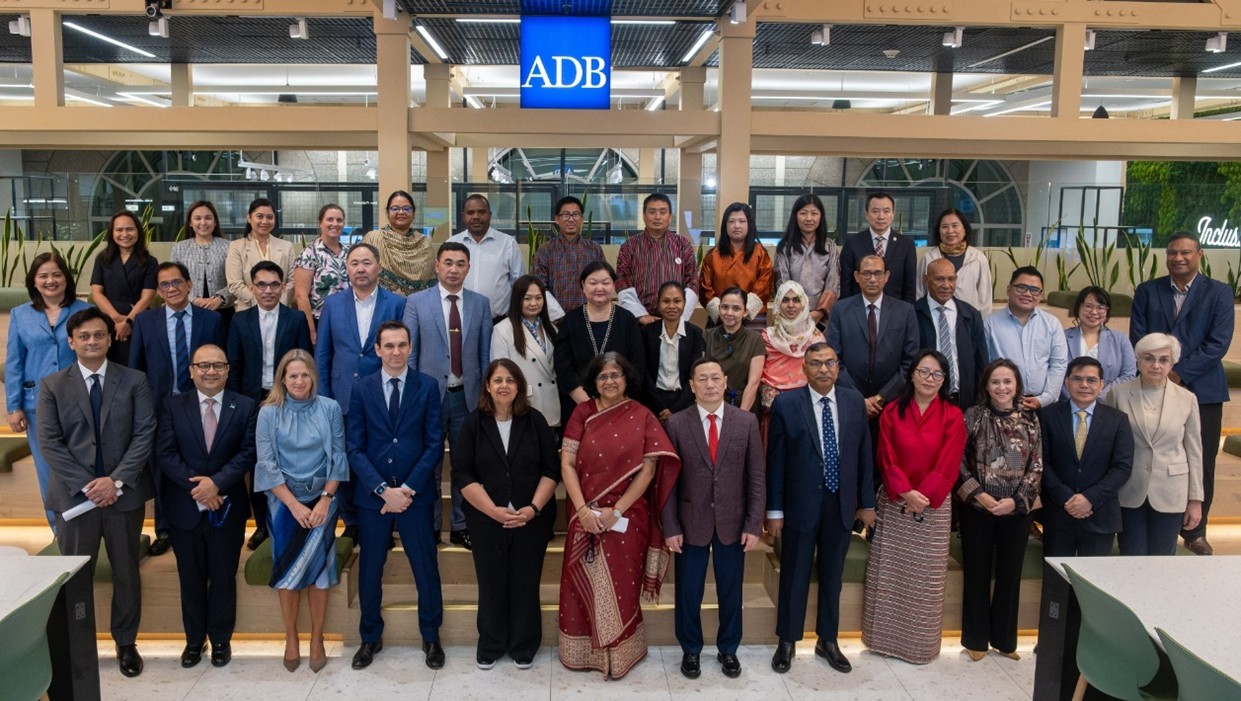
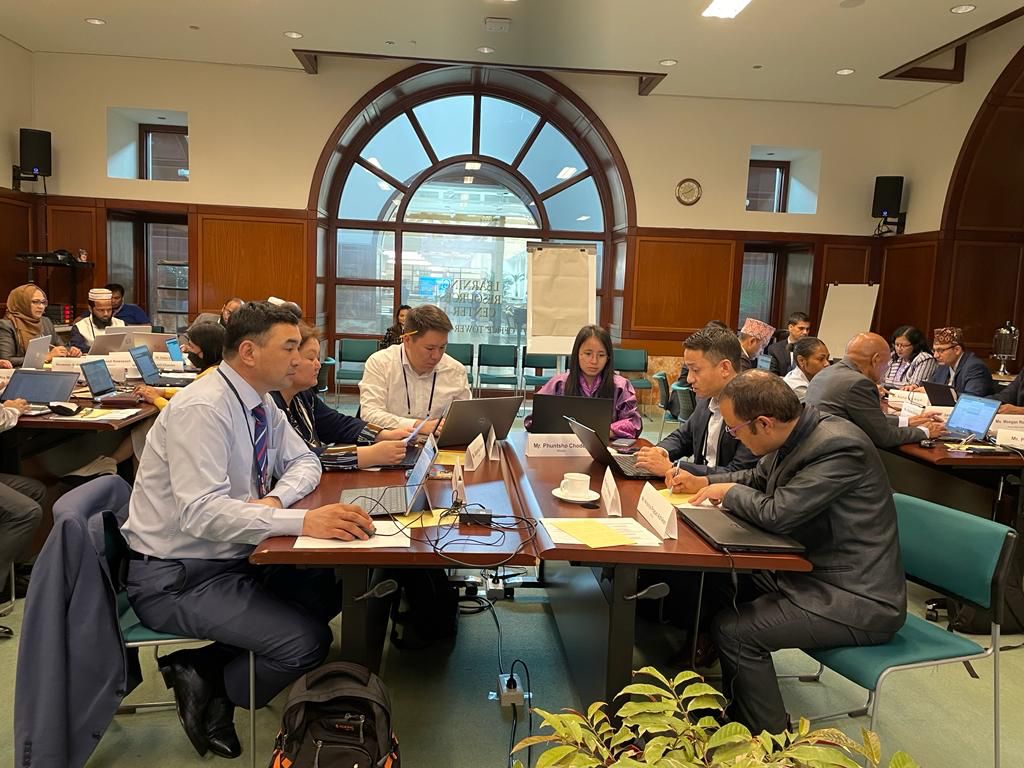
Teams from SAIs Bangladesh, Bhutan, Mongolia, Nepal, Philippines, and Papua New Guinea have joined the IDI/ADB organized workshop in Manila to develop their plans for assessing performance audit practices in their SAIs.
IDI ADB Sustainable PA practices – Regional workshop in Manila Teams from SAIs Bangladesh, Bhutan, Mongolia, Nepal, Philippines, and Papua New Guinea have joined the IDI/ADB organized workshop in Manila to develop their plans for assessing performance audit practices in their SAIs. After assessment of their performance audit practices and identification of needs, SAIs will proceed with tailored efforts to strengthen the practices to increase sustainability and impact of their performance audits. IDI has committed to team closely with SAIs and support them in both – assessment of needs by end September 2023 and fine-tuning their policies, systems, methodologies, and practices throughout 2024-2025. Fine-tuning will include but not be limited to strategizing performance auditing, bringing audit practices in line with ISSAIs (International Standards of Supreme Audit Institutions) and beyond, developing competency frameworks for performance auditors, transforming from ‘stand-alone’ quality review and assurance activities to overall quality management system and audit impact assessment techniques. Updated policies, systems and practices will then be tested while conducting pilot audits.
The IDI/ADB project is one of IDI’s new initiatives. This is the first time that IDI works together with the development bank. IDI as a platform offering holistic development support to SAIs partnering with a development bank financially supporting the initiative could result in an excellent synergy. Synergy and impact in terms of growing capacity, credibility, and recognition of participating SAIs as professional and reliable auditors advising governments on how to raise economy, efficiency and effectiveness of government systems, programs and service to people.
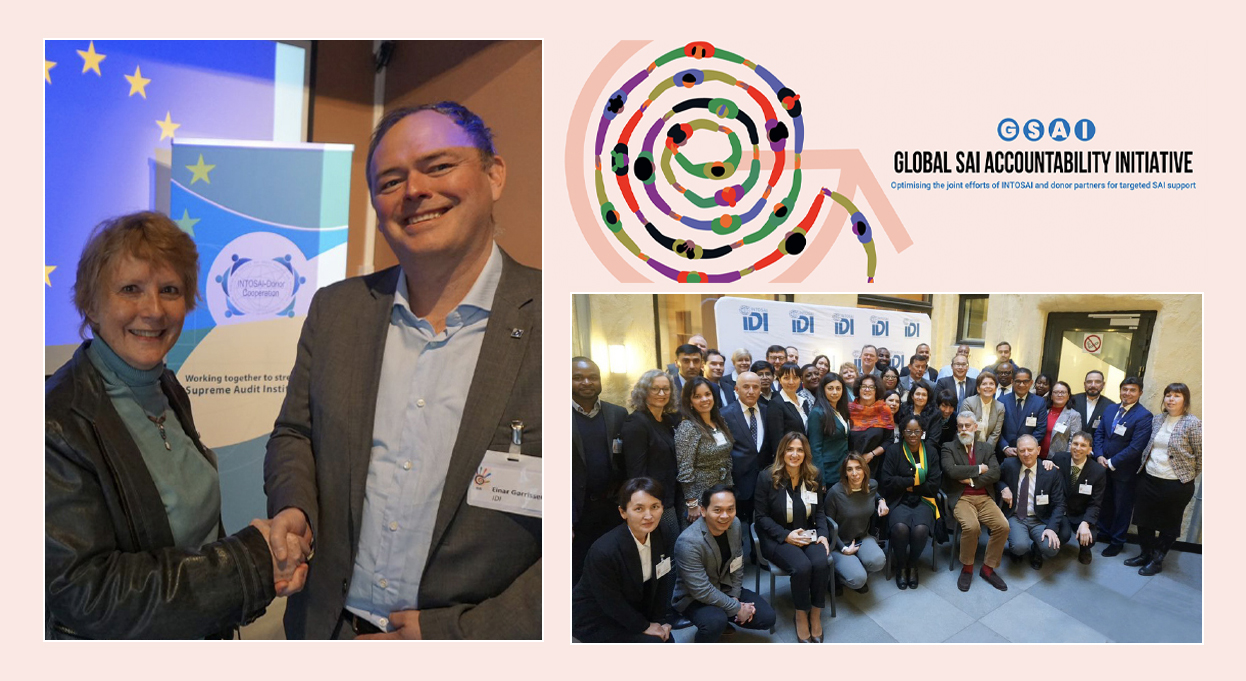
GSAI brings partners together to craft support projects for the SAIs of Belize, Benin, Dominica, Haiti, Honduras, Kyrgyzstan, Lebanon and Tajikistan
The Global SAI Accountability Initiative (GSAI) aims to mobilize effective and well-coordinated support to SAIs in challenging contexts. The SAIs of Belize, Benin, Dominica, Haiti, Honduras, Kyrgyzstan, Lebanon and Tajikistan have joined the initiative. These SAIs have unique opportunities for development and needs of support. Tailored country projects are to be developed for each of them in partnership with peer SAIs, donors and implementation partners.
The EU has stepped up as a key donor for the initiative. 2 mill Euro is provided to IDI for the period 2023 to 2026. The funding enables IDI to take a lead coordinating role and fund initial support in each country.
 The Director General of IDI, Mr Einar Gørrissen, is excited about the grant from the EC: “GSAI is an important effort by the global donor and INTOSAI community to reach out to SAIs in challenging contexts. We are proud to be taking this forward together with so many peer SAIs and partners. Within INTOSAI, we have collectively wide experience and access to resources in most areas of SAI development. When so many partners have joined the initiative this demonstrates the collective commitment in INTOSAI to mutual sharing and development. I also hope that other donors will come on board, with the goal of creating inclusive and effective SAIs that really can make a difference to their citizens. Each SAI has a unique need of support, and financial donors are encouraged to engage with the beneficiary SAI and technical providers in each country to find an effective model of funding.”
“Supreme Audit Institutions ensure accountability and good use of public resources,” says Ms Erica Gerretsen, Head of Macro-economic Analysis, Fiscal Policies and Budget Support unit in the European Commission. “These institutions are a key part of a modern and democratic governance system, providing the public with objective information on how government spends money and perform. By funding IDI we see a great potential for effective and trustful peer support for the SAIs. Ultimately we look forward to see each SAI make a difference in their country. For us, stronger SAIs lead to better governance and thereby greater progress towards the Sustainable Development Goals. We can narrow the investment gap and foster economic development – implement the European Global Gateway initiative – only in a well governed and accountable framework. Stronger SAIs create trust and willingness among donors to fund development in these countries.”
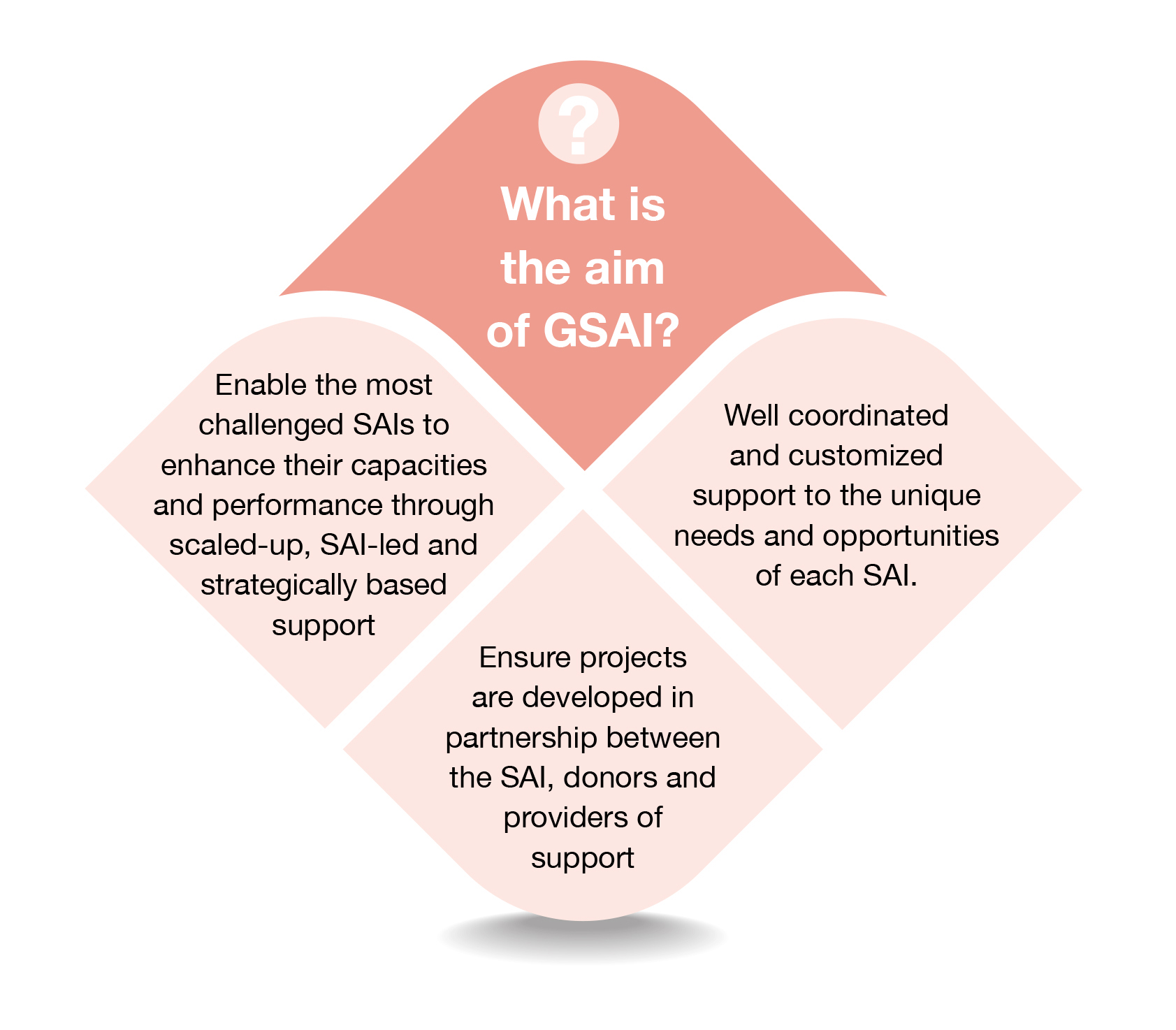 The initiative was launched in 2022 by the INTOSAI-Donor Cooperation as part of its broad work to promote support, independence, performance and benefits of SAIs in developing countries. GSAI is expected to empower the SAIs to take forward their own capacity development and reach a new level of sustained capacities and performance.
The GSAI kick-off workshop brings together key representatives of the beneficiary SAIs, donors, peer SAIs, regional INTOSAI secretariats and implementation partners ready to provide support. In the kick-off event the partners aim to develop trust, understanding and a strong collaboration in each country. During the event the partners work in country groups to draft a project design and agree a way forward to secure funding and establish projects. The aim is to enable projects to be effective and collaboration started in Q3.
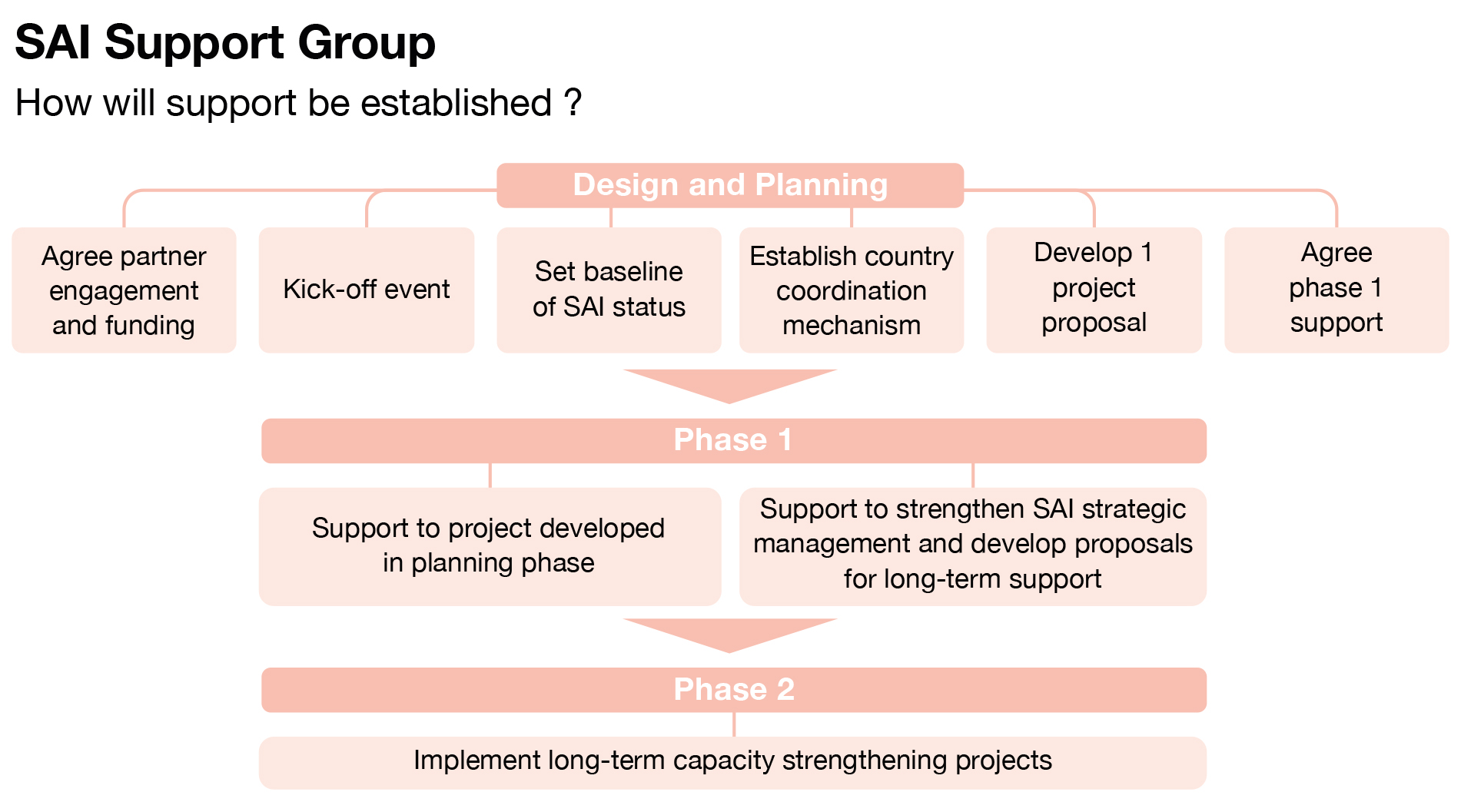
The overall process of GSAI is shown in the illustration below. In each country the SAI and interested partners are working together to develop projects. How projects will be designed depends on the requested areas of support as well as funding and technical support available. The aim of phase 1 support is to get projects started without a long planning period, while phase 2 projects can be wider and based on experiences acquired in phase 1. In each country the intention is to establish a “SAI Support Group” that brings all key partners together to clarify what can be supported and coordinate efforts.
For more information about GSAI, See the website here GSAI | INTOSAI-Donor Cooperation (intosaidonor.org) or contact programme manager Jostein F. Tellnes (Jostein.tellnes@idi.no)

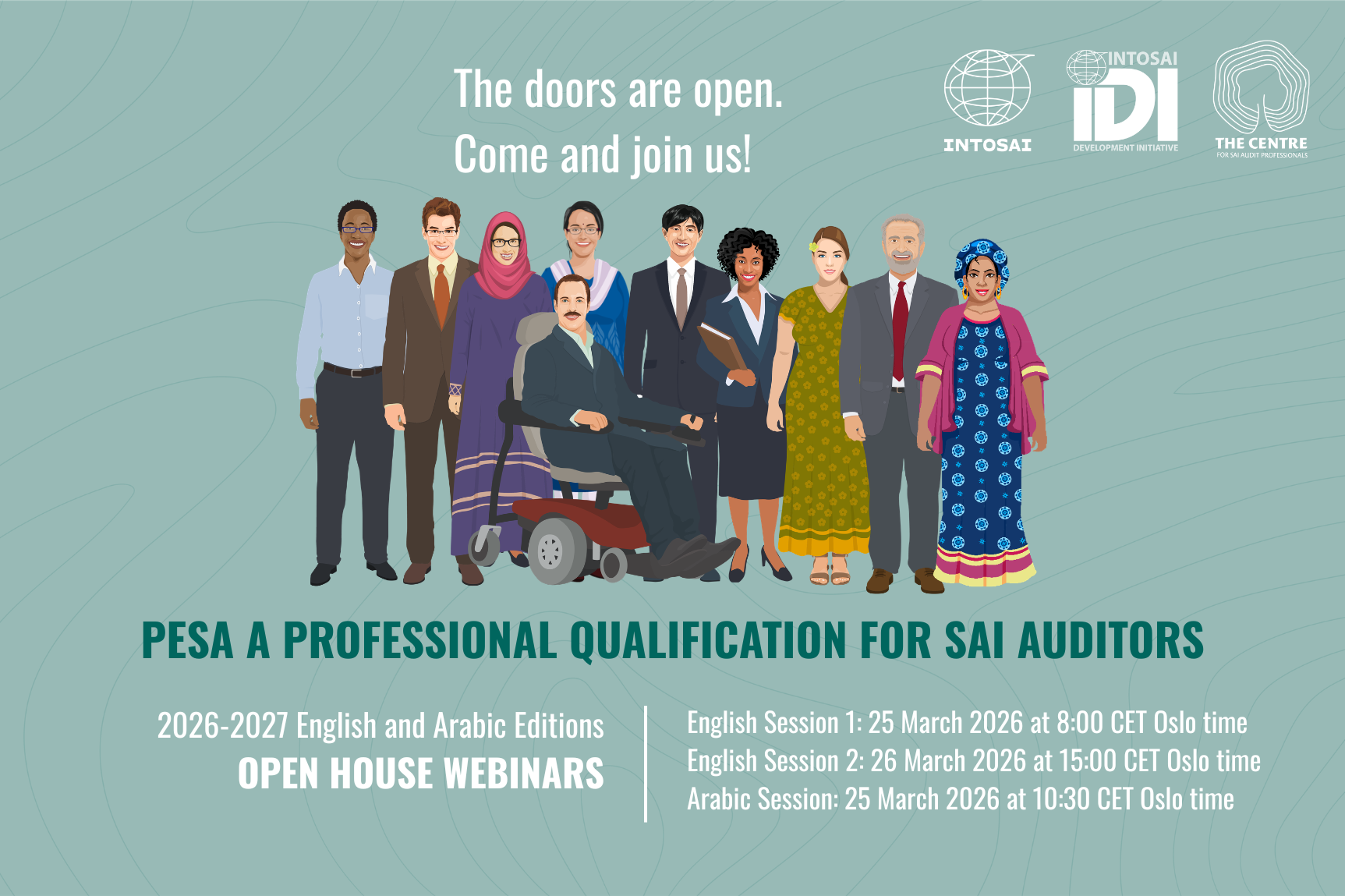
The INTOSAI Development Initiative is delighted to announce that we will launch a new round of the Professional Education for SAI Auditors (PESA). PESA is a professional education and certification initiative that aims to create a critical mass of SAI audit professionals with competencies to add value to the SAI’s professionalisation journey. It provides opportunities for education, assessment and reflection in partnership with the SAI. The syllabus is based on INTOSAI’s Competency Framework.
To learn more about PESA, come and join us in the following Open Houses:
Open House 1 – 8 March 2023 at 7:00 am Oslo time: https://zoom.us/s/95046755260
Open House 2 – 9 March at 3:00 pm Oslo time: https://zoom.us/s/96588350284
Please visit our PESA website for any updates https://www.idi.no/work-streams/professional-sais/pesa-p
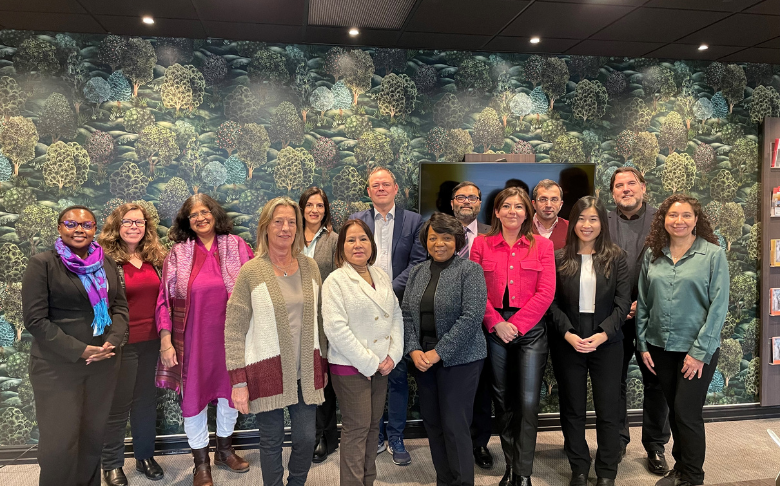
The initiative aims to transform a group of SAI auditors into change agents who will develop change strategies for their SAIs and lead a performance or compliance audit in themes related to gender, poverty, disability, ethnicity, age, or migration. A global team of resource persons met in Oslo from 6 to 15 February 2023 to design and develop the initiative’s education material. The team was composed by the IDI team responsible for EFA, experts in audit from SAIs of Chile, Costa Rica, Georgia, Kenya, Philippines, Uruguay and USA, and subject matter experts from SAI Chile, UNDESA and UN Women.
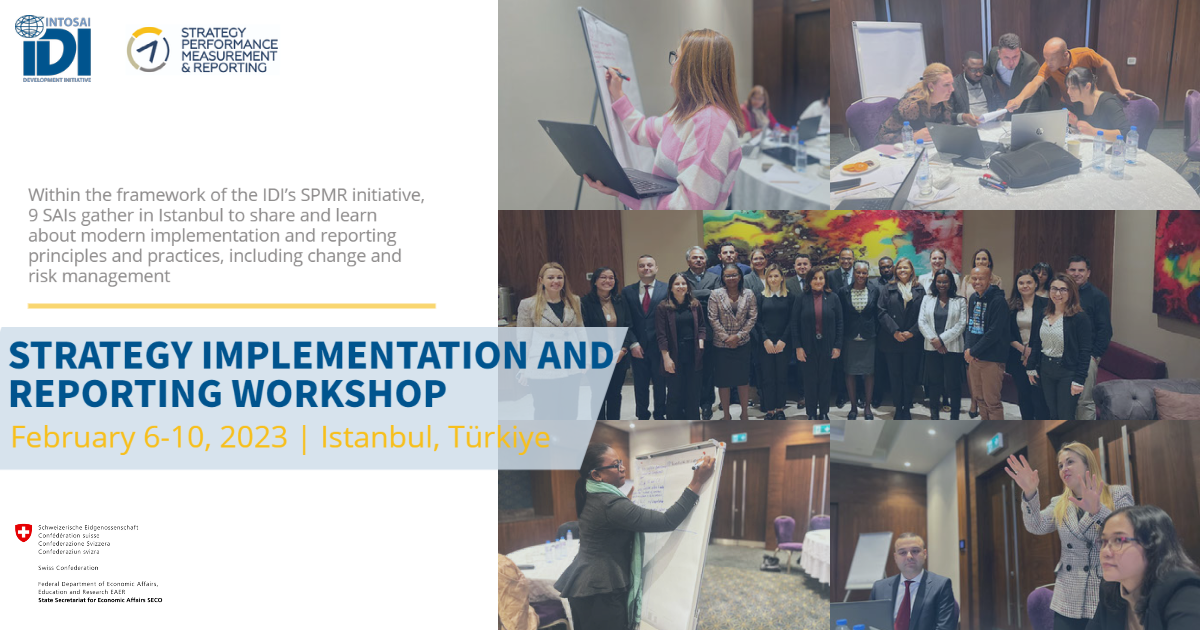
Within the scope of the IDI’s Strategy, Performance Measurement, and Reporting (SPMR) initiative, 18 representatives from 9 SAIs gathered in Istanbul to attend the workshop on Strategy Implementation and Reporting.
The SAI PMF Team in the IDI has developed a SAI PMF repeat assessment tool kit to provide advice to assessment teams on how to conduct a SAI PMF repeat assessment and how to compare the results of two assessments.
2nd Wave: What is a SAI PMF repeat assessment? The SAI PMF Team in the IDI has developed a SAI PMF repeat assessment tool kit to provide advice to assessment teams on how to conduct a SAI PMF repeat assessment and how to compare the results of two assessments. The repeat assessment tool kit will assist assessors conducting a SAI PMF repeat assessment to understand how the performance of an SAI has changed over time. The tool kit comprises a guidance document and annexes for registering scores and analysing performance change. The guidance document covers limitations of a repeat assessment, key principles and process for conducting a repeat assessment. Further, the guidance document describes a step-by-step approach on how to compare the results of two SAI PMF assessments, particularly where the pilot version of the SAI PMF was used in the first assessment and the 2016 version in the repeat assessment. The main changes between the 2016 version and two earlier versions, namely pilot version and version 3.1, have been highlighted in the guidance document. It is envisaged that moving forward, more SAIs will conduct a SAI PMF repeat assessment for the purpose of monitoring progress over time. This will necessitate comparison of results by assessment teams. To supplement the SAI PMF repeat assessment tool kit, SAIs intending to conduct a repeat assessment are free to contact the SAI PMF Team in the IDI for any technical assistance with the process. SAI PMF Repeat Assessment Toolkit can be found here: https://www.idi.no/work-streams/well-governed-sais/sai-pmf/resources
A SAI PMF repeat assessment is a performance assessment conducted by a SAI which has previously assessed its performance using the SAI PMF
LOTA Scan: A tool for Supreme Audit Institutions
In response to this rapidly changing environment and technology development, IDI has developed a LOTA Scan Tool to help SAIs in making better use of technology in fulfilling their audit mandates, by planning technology-specific audits, developing technology skills and introducing new technologies into the SAI audit practice.
The LOTA Scan aims to provide SAIs with a tool to analyse their internal and external environment in the use technology in audits and use of technology by governments. The LOTA Scan part related to external environment assessment helps to identify areas where technology audits are required and outlining technology-related audit projects to be included in LOTA Strategy. At the same time, external environment assessment helps to identify the technological needs of SAI for using technology in audits. In turn, the internal environment assessment helps to assess the current state at the SAI and how well SAI responds to the technological needs arising from the external environment.
The LOTA Scan Tool consists of
The more information on LOTA Scan Tool along with download links may be found here: https://idi.no/work-streams/relevant-sais/lota/lota-scan