SDGs – Auditing the SDGs


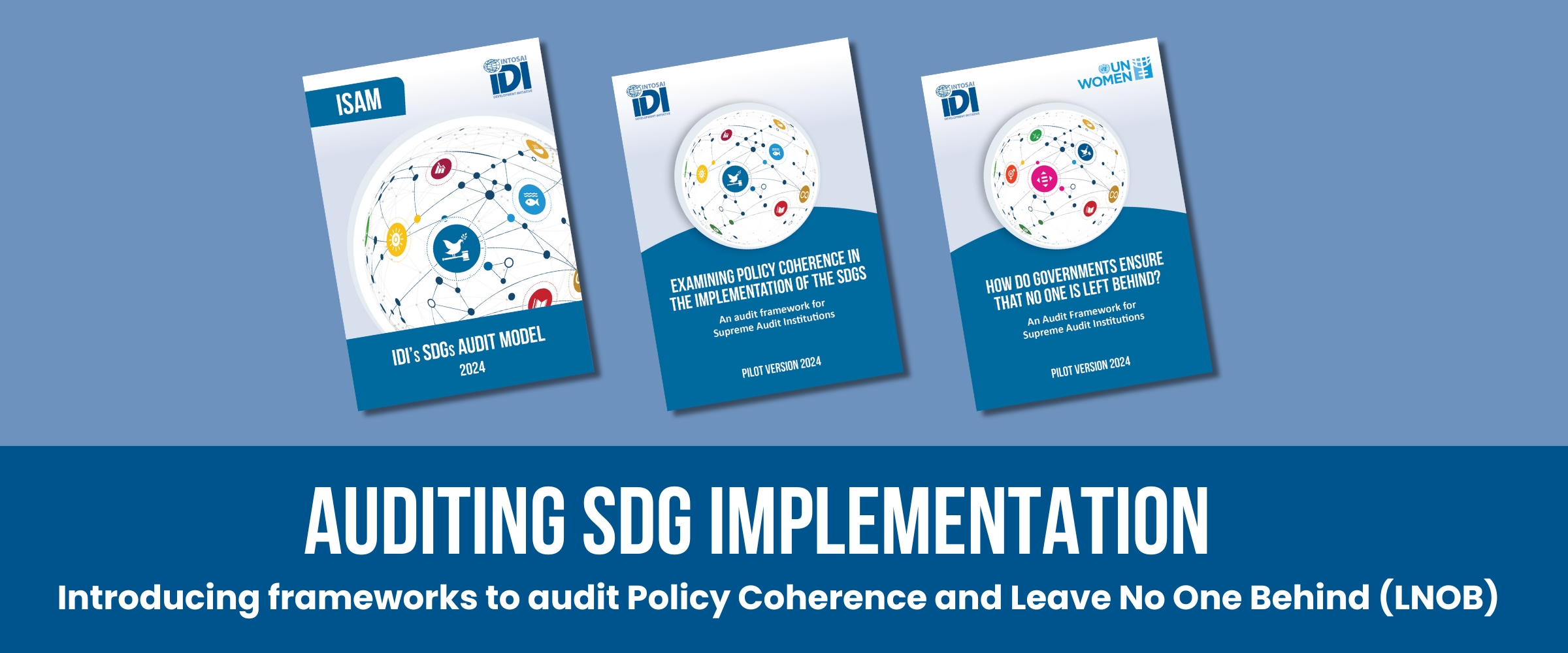
We are delighted to present to you the 2024 version of IDI’s SDGs Audit Model (ISAM). This is a substantial update and revision from the pilot version of ISAM published in March 2020. With the publication of ISAM 2024, we withdraw the pilot version of ISAM 2020.
ISAM 2024 provides a practical ‘how-to’ guidance to SAIs for auditing SDG implementation. It also includes considerations on strategically planning for impact by including audits of SDG implementation in the SAIs’ strategic and annual audit plans. While focusing on policy coherence and a whole-of-government approach, ISAM recognises SAI diversity and provides guidance for conducting audits that comply with ISSAIs, contribute to SAI audit impact and mainstream multistakeholder engagement and the principle of leave no one behind.
ISAM 2024 contains a revised definition of an audit of SDG implementation and identifies two main entry points – process and programmes, for conducting audits of SDG implementation. It provides examples from the cooperative audits that piloted the previous version of ISAM (published in 2020): “Strong and Resilient Health Systems” (linked to SDG 3.d), “Sustainable Public Procurement Using Data Analytics” (linked to SDG 12.7), and “Audit of Elimination of Intimate Partner Violence Against Women” (linked to SDG 5.2). In total, these cooperative audits were carried out by 49 SAIs of 5 INTOSAI regions. The results and feedback from such pilots allowed for a comprehensive review of ISAM, which was conducted in 2023-2024 by IDI in collaboration with the United Nations Department of Economic and Social Affairs (UNDESA).
By the end of 2024, IDI will issue two audit frameworks on auditing policy coherence and auditing leave no one behind to supplement the guidance provided in ISAM 2024. The Arabic, French and Spanish versions of ISAM 2024 will also be available on our website by the end of 2024.
The pilot version of ISAM issued in 2020, in English, Arabic, French and Spanish, can be found here (https://idi.no/work-streams/relevant-sais/auditing-sdgs/audit-sdgs-implementation/isam/guidance-publications).
Please contact isam@idi.no if you have any questions.
IDI supports SAIs in conducting ISSAI based cooperative audits as one of the ways of facilitating ISSAI implementation. As ensuring audit quality is one of the main aims of cooperative audit support, facilitating quality assurance reviews is a key component of cooperative financial, performance and compliance audits supported by the IDI. The IDI Cooperative Audit Support Model provides holistic support to participating SAIs in planning, conducting, reporting, following up on the audit and facilitating audit impact. The nature of delivery of such support varies based on circumstances e.g. outbreak of the COVID-19 pandemic and subject matter to be audited. By and large the model consists of the following components:
Recognising the importance of the 2030 Agenda for Sustainable Development in improving the lives of citizens, INTOSAI identified the Sustainable Development Goals (SDGs) as a strategic priority (Priority 2) in its Strategic Plans 2017–2022 and 2023–2028. Through these plans, INTOSAI called upon member Supreme Audit Institutions (SAIs) to contribute to the follow-up and review of the SDGs within the context of each nation’s sustainable development efforts and each SAI’s individual mandate.
As part of this global effort, the INTOSAI Development Initiative (IDI) has been supporting SAIs in auditing the SDGs since 2016, through high-quality, high-impact performance audits. So far, IDI and key stakeholders have supported more than 70 SAIs across all INTOSAI regions through performance audits of preparedness for implementation of the SDGs, and performance audits of SDG implementation.
United Nations General Assembly Resolution A/RES/79/231 (2024)
UN DESA (Division For Public Institutions And Digital Government)
Auditing the SDGs requires strong multi-stakeholder engagement. We invite you to connect with us and join the global dialogue on supporting SAIs in contributing to SDG implementation and in building effective, accountable, and inclusive institutions: SDG@idi.no