News
Statement from the INTOSAI Donor Cooperation Goodwill Ambassador on SAI Independence regarding the recent developments in the Gambia
17/09/2025
It is with great concern that I have witnessed the recent development around the independence of the Office of the Auditor General of the Gambia, an office which has been performing its duties very professionally under the Leadership of Momodou Ceesay as Auditor General.
Mr. Ceesay was recently offered a position as Member of the Cabinet, which he officially declined, preferring to focus on his constitutional office as Auditor General of the Gambia. In an unexpected turn of events, it was particularly shocking to witness the police entering the premises of the Audit Institution to forcefully remove the Auditor General from office.
This unilateral removal process is not just shocking, it appears to be in stark contrast with the constitutional and legal provisions around the removal of the Auditor General, which lay out several steps, including the appointment of an independent Tribunal.
The Independence of an Auditor General and its office is a critical element of any democratic society as it contributes to upholding the principles of good governance and accountability.
Therefore, it should not be compromised, and threats to independence should not go unnoticed. We should always remain vigilant and speak up when SAI Independence is under threat. In my capacity as Global Ambassador for SAI Independence, I remain committed to bringing my voice to this important issue: Audit offices must be able to perform their mandate without undue interference.
As the process is now heading to the Courts of the Gambia, I sincerely hope that the democratic principles of the rule of law will prevail and that the independence of the Auditor General will be safeguarded in line with the international standards promoted by the INTOSAI and the United Nations.

IDC Goodwill Ambassador for SAI Independence, the Right Hon. Helen Clark
For media enquiries, please contact: communications@idi.no

The INTOSAI-Donor Cooperation (IDC) has appointed the Right Hon. Helen Clark, former Prime Minister of New Zealand and Administrator of the UN Development Program (UNDP) to serve as the IDC Goodwill Ambassador for SAI Independence for an initial term of three years (2022-2024).
Helen Clark says: “In the current context of constitutional and democratic backsliding, combined with unprecedented emergency spending and economic disruptions during the COVID-19 pandemic, there’s never been a greater need for SAIs to be able to carry out their jobs without interference”.
Read the full press release here
The objective of the Goodwill Ambassador initiative is to increase awareness about independence as a precondition for SAIs to effectively perform their role as accountability agents and to mobilize support to SAIs in their efforts to gain or maintain their independence. As Goodwill Ambassador for SAI Independence, Ms. Clark will lend her powers of persuasion to promote SAI independence on the global policy agenda on public financial management, integrity, and accountability. She will speak at meetings and events organized by the INTOSAI, development partners and multilateral institutions, among others, and participate in media interviews and video releases.
IDI will manage the initiative on behalf of IDC.

Please email us at independent.sai@idi.no. Every e-mail we receive is assessed and followed-up by the Independent SAIs team.
IDI treats all information sent to us at this address as confidential. Please note, however, that we cannot guarentee the confidentality or security of all information sent electronically, particularly if you are contacting us from a work e-mail or computer.
As part of the SAI Independence Rapid Advocacy Mechanism, IDI occasionnaly issues statements concerning the independence of a particular SAI. These statements may be issued by IDI alone, or may be joint statements issued in cooperation with one or more partner organizations or INTOSAI bodies.
Independence is vital prerequisite for supreme audit institutions to fulfill their mandate to provide an effective oversight function on government activities. Whenever the independence of a supreme audit instituion is threatened, IDI stands ready to investage and respond. If you are aware of a current threat to SAI independence, please report it.
Contact the IDI SIRAM team to ensure accountability remains at the heart of governance. Together, we can safeguard the independence of our institutions.
They are a key component of any government’s accountability system. The independence of the SAI from the executive bodies it audits is fundamental to its role in holding governments to account and building trust between the organs of the state and society.
Yet evidence shows that SAI independence is continuously challenged by executive interference, democratic backsliding, and decline in the rule of law. These threats can also manifest in a variety of ways such as through amendments to a country’s constitution or audit legislation, challenges to SAI mandates, inadequate follow up of SAI reports, sharp cuts in SAI budgets, and attempts to remove the Head(s) of the SAI or delay the appointment of a new Head.
The Supreme Audit Institution Rapid Advocacy Mechanism (SIRAM) has been developed to assist SAIs in addressing these immediate threats to their independence. It is a response mechanism designed to identify and mitigate breaches of SAI independence. It builds on INTOSAI global expertise and provide to SAIs and interested stakeholders an avenue to raise concerns regarding the independence of SAIs. it uses IDI’s targeted expertise and assessment tools to mobilise global advocacy efforts and address ongoing threats.
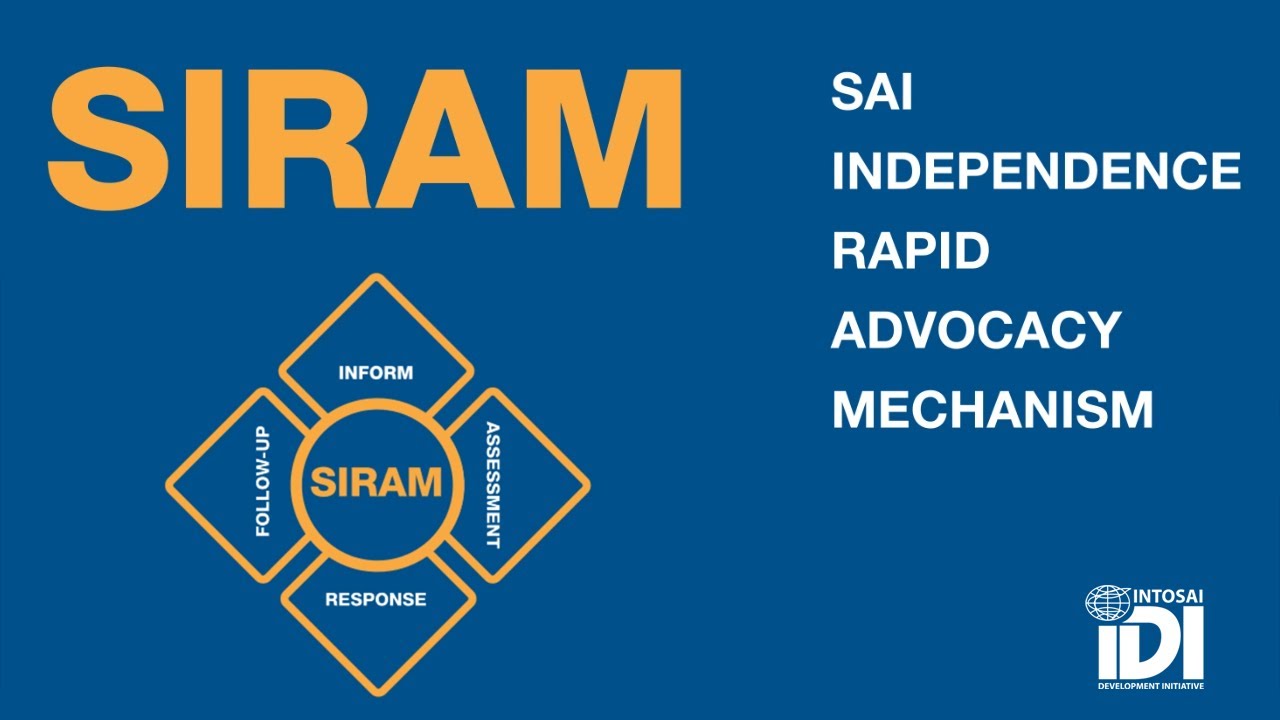
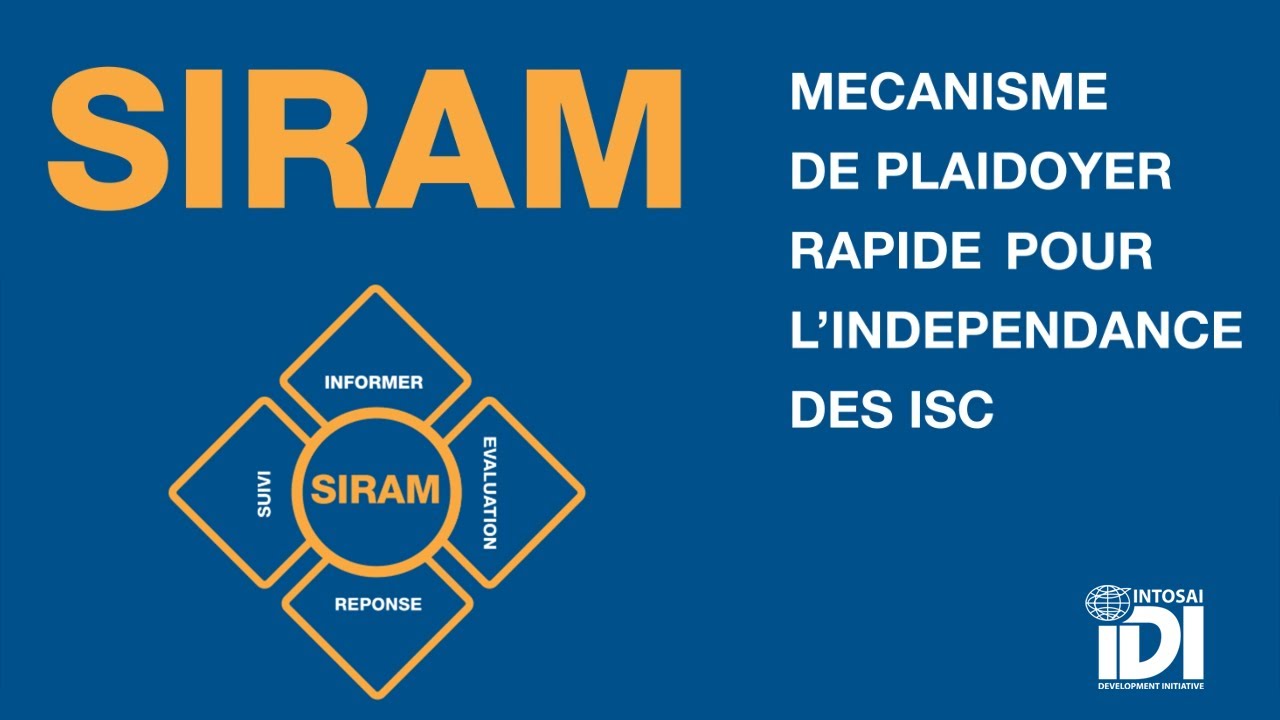
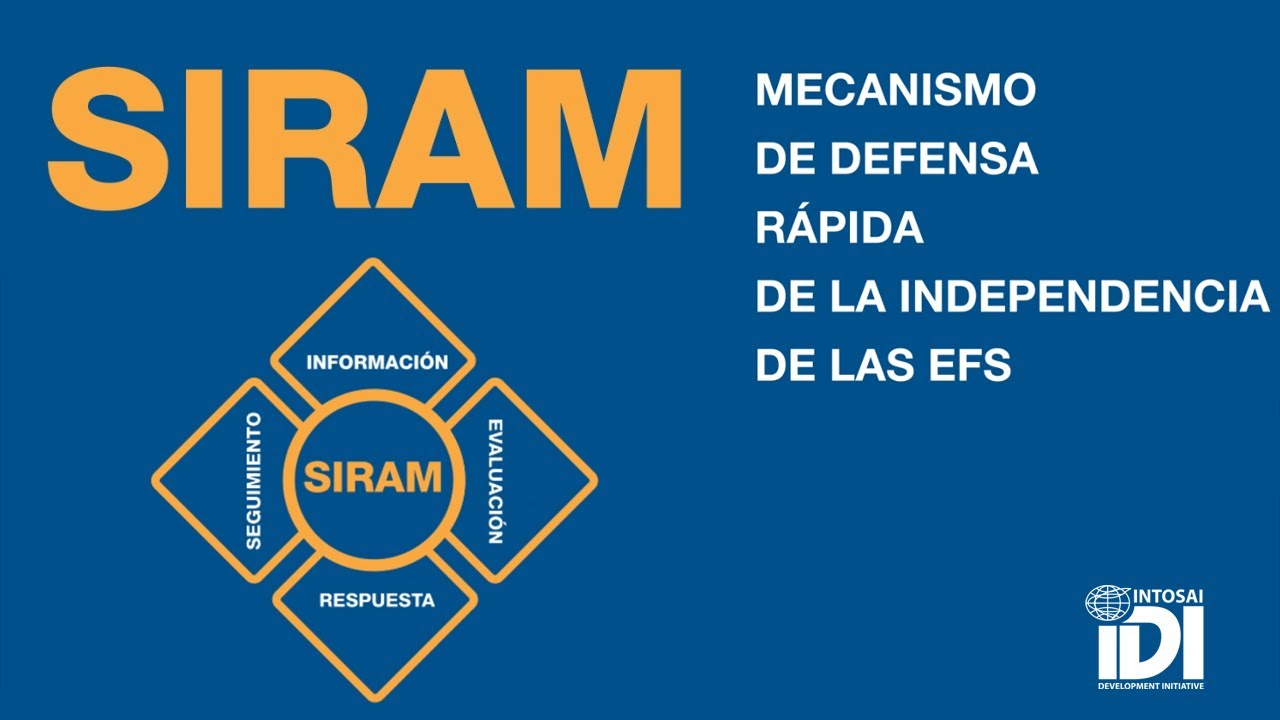
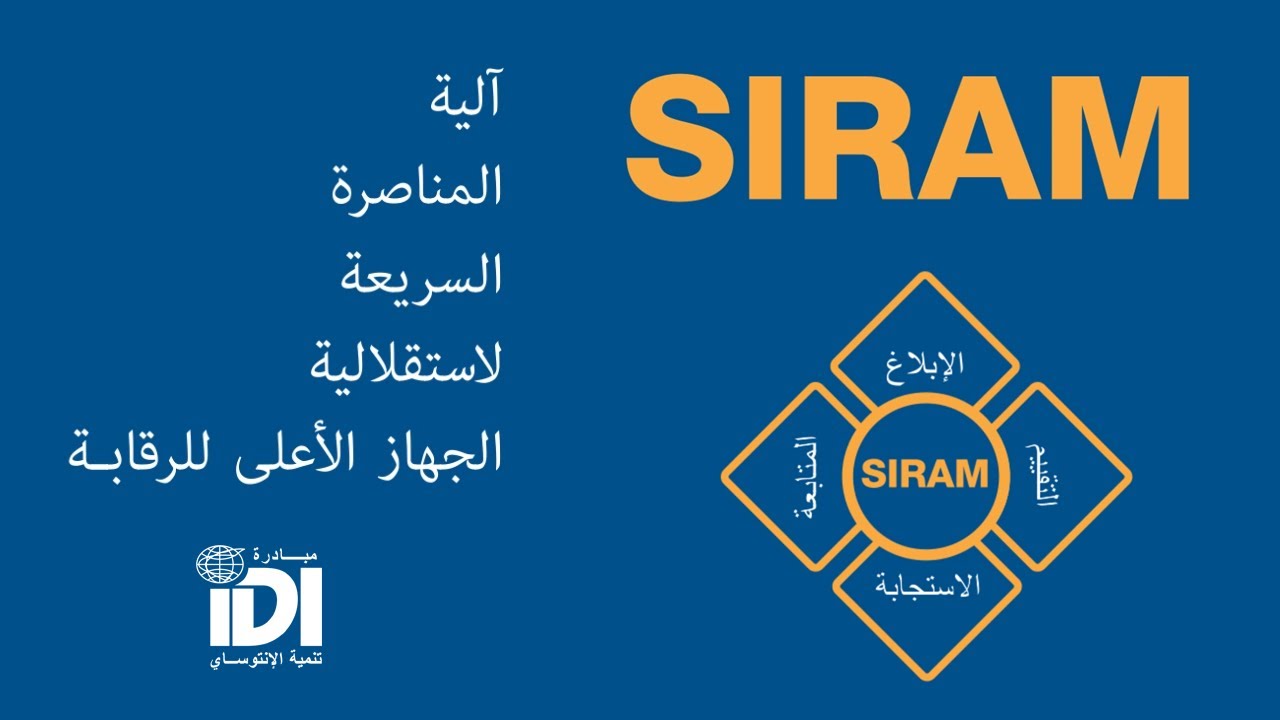
The process begins with information gathering to establish the legitimacy and severity of the threat.
Once the initial review confirms a valid threat, the case moves to the assessment phase:
In the response phase, the SIRAM tool mobilizes advocacy and action through targeted interventions, such as:
The final stage ensures that advocacy efforts have a lasting impact:
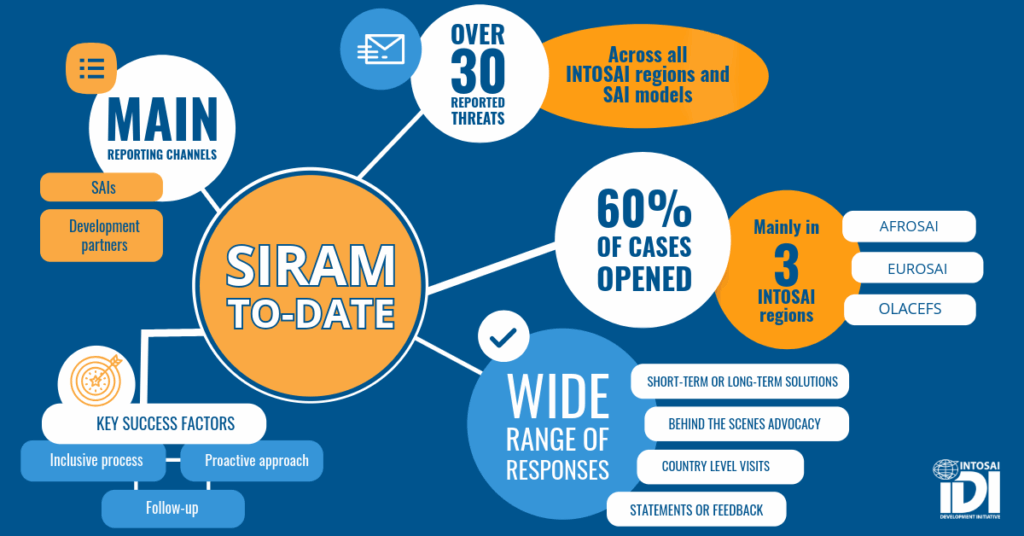
SIRAM is fast and ‘technical’ — not responding to the political context, but to the acts and facts. It refers to internationally respected declarations and agreements, and is a step on the long way to better governance and accountability.
In my opinion, the long-lasting experience of the IDI is undeniable.
It helped and will continue to help. I would, therefore, strongly encourage all Heads of SAIs who encounter similar restrictions to their independence not to wait and to notify IDI as soon as possible when similar threats arise.
Without independence and protection from outside influence, SAIs cannot operate as reliable public spending watchdogs. The SAI Independence Rapid Advocacy Mechanism (SIRAM) is an important tool that can help protect the ability of SAIs to independently audit government programmes and accounts. It has already demonstrated its ability to address emerging threats to SAI Independence and I look forward to it continuing to enhance independence throughout the public sector auditing community.