News
CRISP Rollout in ASOSAI
22/11/2023
Since the onset of the Coronavirus pandemic many SAIs had to realize that they were not adequately prepared for disruptions and crises. The lack of functioning crisis management procedures made disruptions to SAI work more pronounced, potentially undermining their relevance in ensuring accountability. Despite previous experience, many SAIs also faces outdated and ineffective risk management procedures. Often, their risk management procedures do not adequately capture current risks that are aggravated by the pandemic, like lack of human and financial resources, or risks of digitization.
These challenges to SAIs have led IDI to develop and roll-out a new initiative, focussing on establishing and improving risk and crisis management processes that help SAIs face future disruptions and strengthen their position in the accountability system of their respective countries.
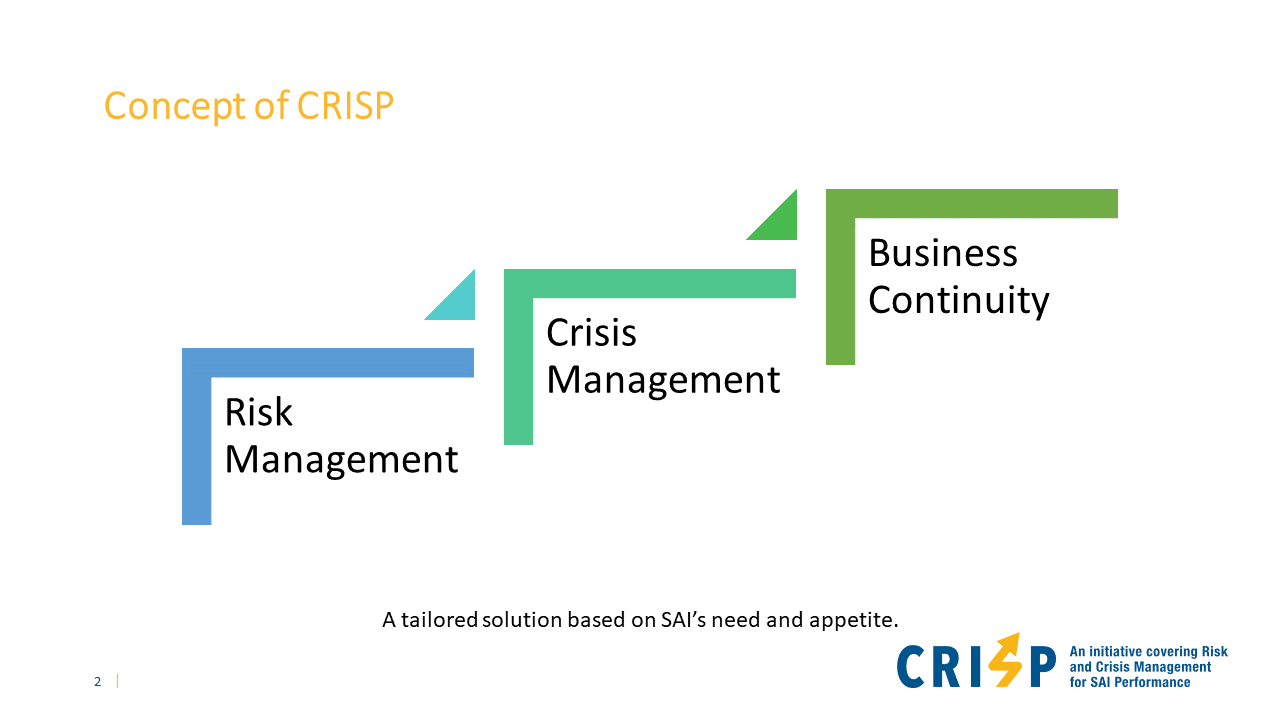
The initiative consists of 3 component covering Risk, Crisis, and Business Continuity for SAIs. We are following ISO Standards for these 3 components.
Risk Management is a continuous approach to safeguard the organization by managing risks for SAIs. We are following industry standards to setup principles, processes, and framework from ISO 31000 to establish Risk Management practices at SAIs.
Crisis management is the application of strategies designed to help an organization deal with a sudden and significant negative event following ISO 22361 standards.
Business Continuity enables the ability to reassure Auditees, Parliament, Government and Publics and all other stakeholders, that the SAI has sound systems and processes in place to operate following ISO 22301 standards.
Risk management is a condition to SAI performance and as such supports a robust strategy and effective operational plan. Like any other private or public organisation, Supreme Audit Institutions (SAI) are not immune from disruption and are exposed to risks.
The SAI strategy and the operational plan are based on assumptions, so it is important that they are designed considering the risks they entail. Doing so, the SAI will be better prepared. This will build the SAI resilience and further improve its performance.
The goal is to reduce the likelihood and impact of negative events, lost opportunities, and surprises and increase the probability that the objectives of the SAI will be met to maximize its performance.
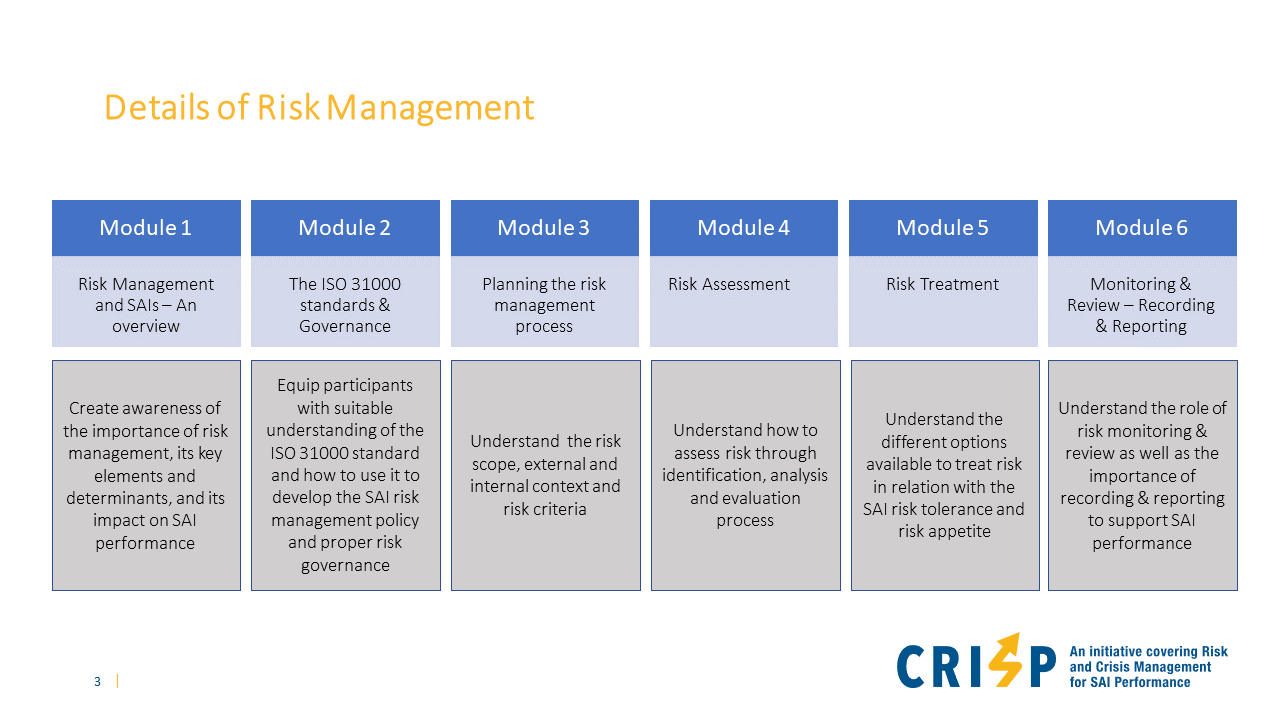
With the modular approach, IDI envision to help SAIs to understand importance of organization wide implementation and practise of Risk Management framework. The approach covers critical components like Risk Management Policy, Risk Identification, Risk Assessment, Risk Treatment, Risk Reporting and of course to ensure the performance of risk management process at optimum level for the SAI. From participants point of view, it is critical to ensure necessary commitment to practically implement (i.e., Risk Management Policy, Risk Assessment, and Reporting) the learnings in SAI, so that SAI get the benefit out of the initiative.
Expectation from the participant SAIs: Once the learning phase is over, we expect the participant SAI will develop a risk management process and will ensure risk assessment and reporting periodically, eventually risk reporting should be an integral part of SAI’s annual report. We will closely work together (if needed), follow up and monitor participant SAIs for the practical implementation of this risk management process at the SAI.
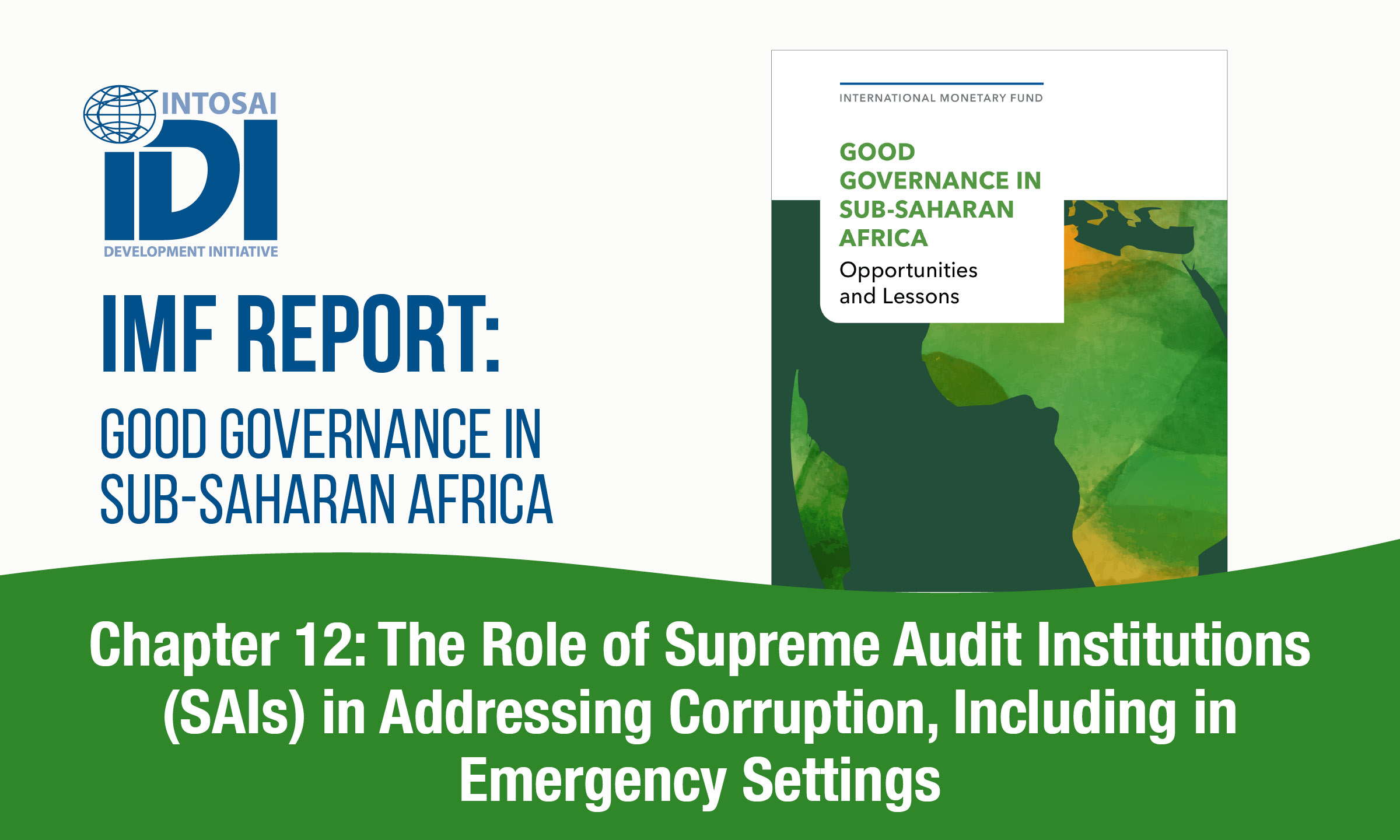
IDI’s Martin Aldcroft, Camilla Fredriksen and Alain Memvuh offer discussions of SAIs’ roles to a wide-reaching IMF report on strong governance
In 2022, the International Monetary Fund published a report: Good Governance in Sub-Saharan Africa, Opportunities and Lessons. IDI’s Martin Aldcroft, Camilla Fredriksen and Alain Memvuh contributed to Chapter 12 to discuss SAIs’ role in addressing corruption, including in emergency settings.
The abstract for Chapter 12 states that:
‘This chapter considers supreme audit institutions (SAIs) as a key pillar of accountability in the management and oversight of public funds, notably in emergency settings. It acknowledges that the primary role of SAIs is to ensure the effectiveness and integrity in the use of public resources, and focuses on how SAIs can contribute to the prevention and detection of corruption, including through agile compliance audits ( real- time audits) in emergency settings. The chapter illustrates some of the challenges SAIs face and explores the IMF’s approach to audits. Sub- Saharan African country cases showcase how the role of SAIs in addressing corruption has been strengthened, and a discussion of agile compliance audits in sub-Saharan Africa highlights the role of SAIs in emergency settings.’
Download and read the full chapter here.
The full IMF Report may be found on the IMF’s site here.
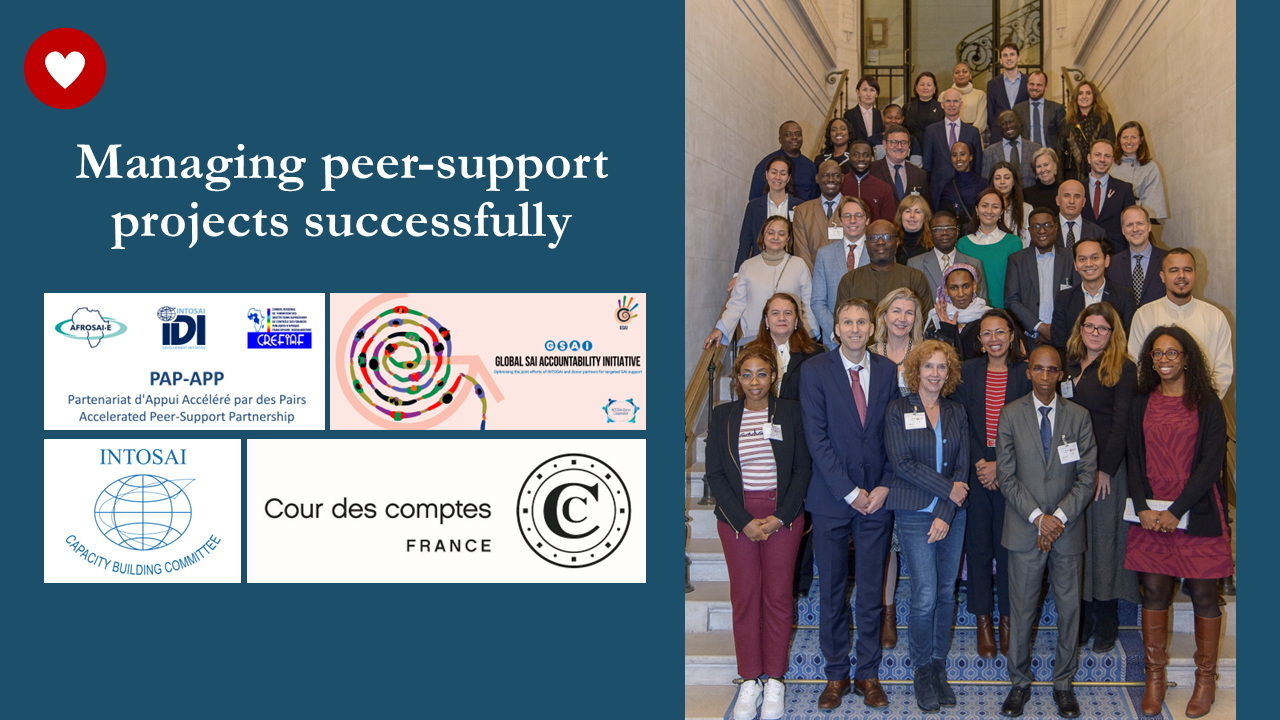
How can capacity development projects supporting Supreme Audit Institutions be managed better, ensuring steady progress, a joyful collaboration and sustainable results?
Ambitious peer-support projects are ongoing for the SAIs of Belize, Benin, Dominica, DRC, Eritrea, Guinea, Haiti, Honduras, Kyrgyzstan, Lebanon, Madagascar, Sierra Leone, Somalia, South Sudan, Tajikistan, The Gambia, Togo and Zimbabwe. In all these countries, there are peer-SAIs engaged who are providing technical support. The projects aim for significant institutional strengthening of the SAI and delivery of audits of national value. This means the projects must deal with quite complex processes and many stakeholders.
In mid-November 2023, representatives of both beneficiary and provider SAIs met in Paris to discuss how these projects can be well managed. The actual project management differs in a number of ways between the country projects, such as the role that partners carry out, the use of digital tools and how coordination with external partners is done. These differences created a unique opportunity for comparison and learning.
Inspired by the 2005 Paris declaration of aid effectiveness, the partners identified key principles and practical approaches for managing peer-support projects. This is captured in a 3-page “new Paris declaration” titled “Managing peer-support projects succcesfully”.
The partners hope the text can be widely used to benefit similar projects and ensure that lessons learned arising from the PAP-APP and GSAI country projects are well-utilised globally.
The event in Paris was conducted in partnership with the Cour des Comptes of France and the INTOSAI CBC work stream of Peer-to-Peer support. The event was possible due to funding by the European Union, USAID, Ministry of Foreign Affairs of France and SAI Qatar. These are funding partners of the PAP-APP and GSAI programmes.
Download the English PDF of “Managing peer-support projects successfully”
Download the French PDF of “Managing peer-support projects successfully”
Download the Russian PDF of “Managing peer-support projects successfully.“
Download the Spanish PDF of “Managing peer-support projects successfully.“
Watch the video from the event
For more information about GSAI and PAP-APP, contact programme manager Jostein F. Tellnes (Jostein.tellnes@idi.no)
In the second quarter of 2023, the International Journal of Government Auditing published Volume 50, Issue 2.
The issue focused on emerging science and technology issues in the public auditing sector.
In this publication, the International Organisation of Supreme Audit Institutions (IDI) shared how it is spearheading sustainable technology audit practices for better utilization of technology by governments and auditors.
Read the full article here.
The full issue may be found here.
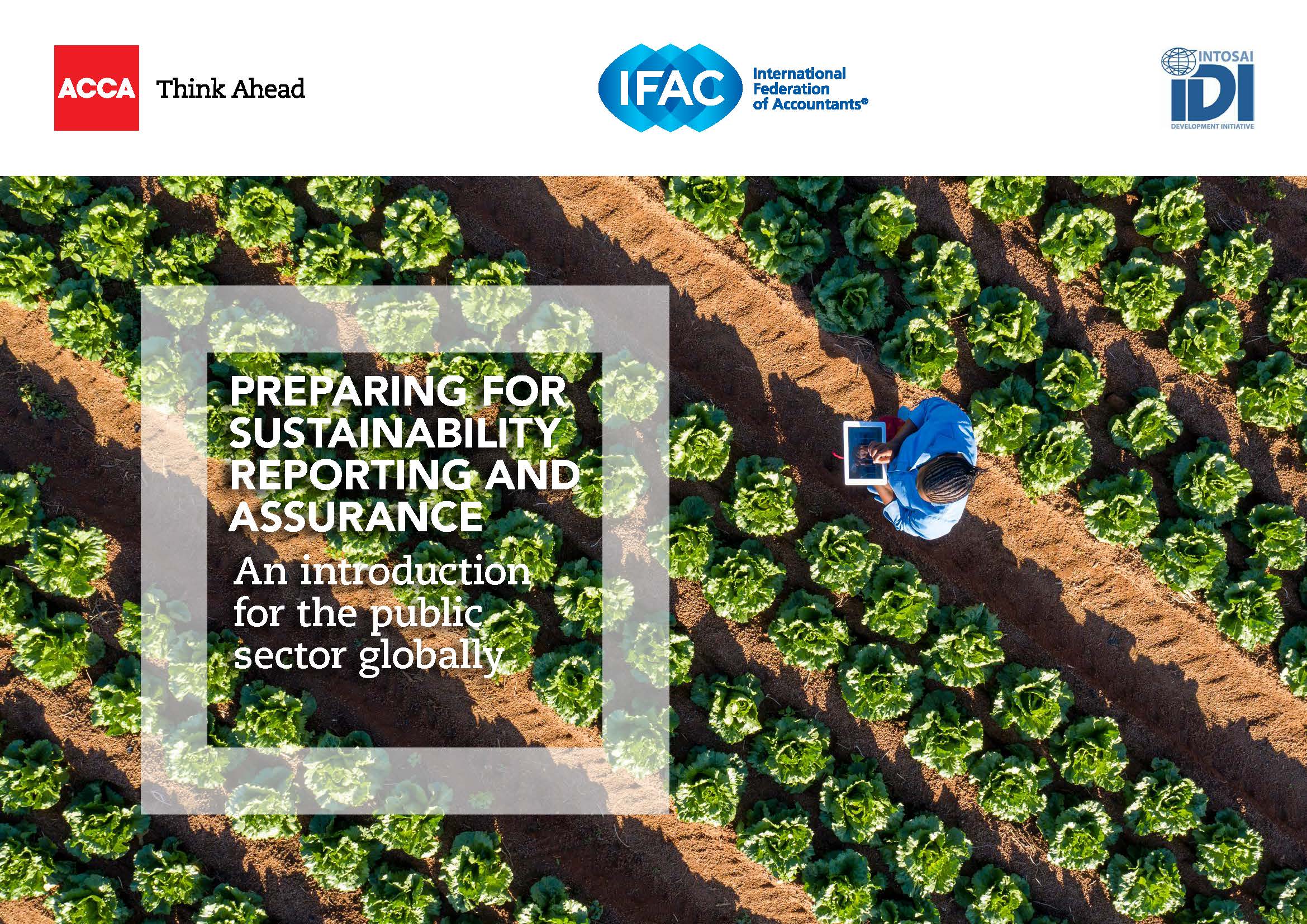
Government audit profession has key role in providing oversight on sustainability reporting in the public sector, says joint report launched at IDI’s Global Summit
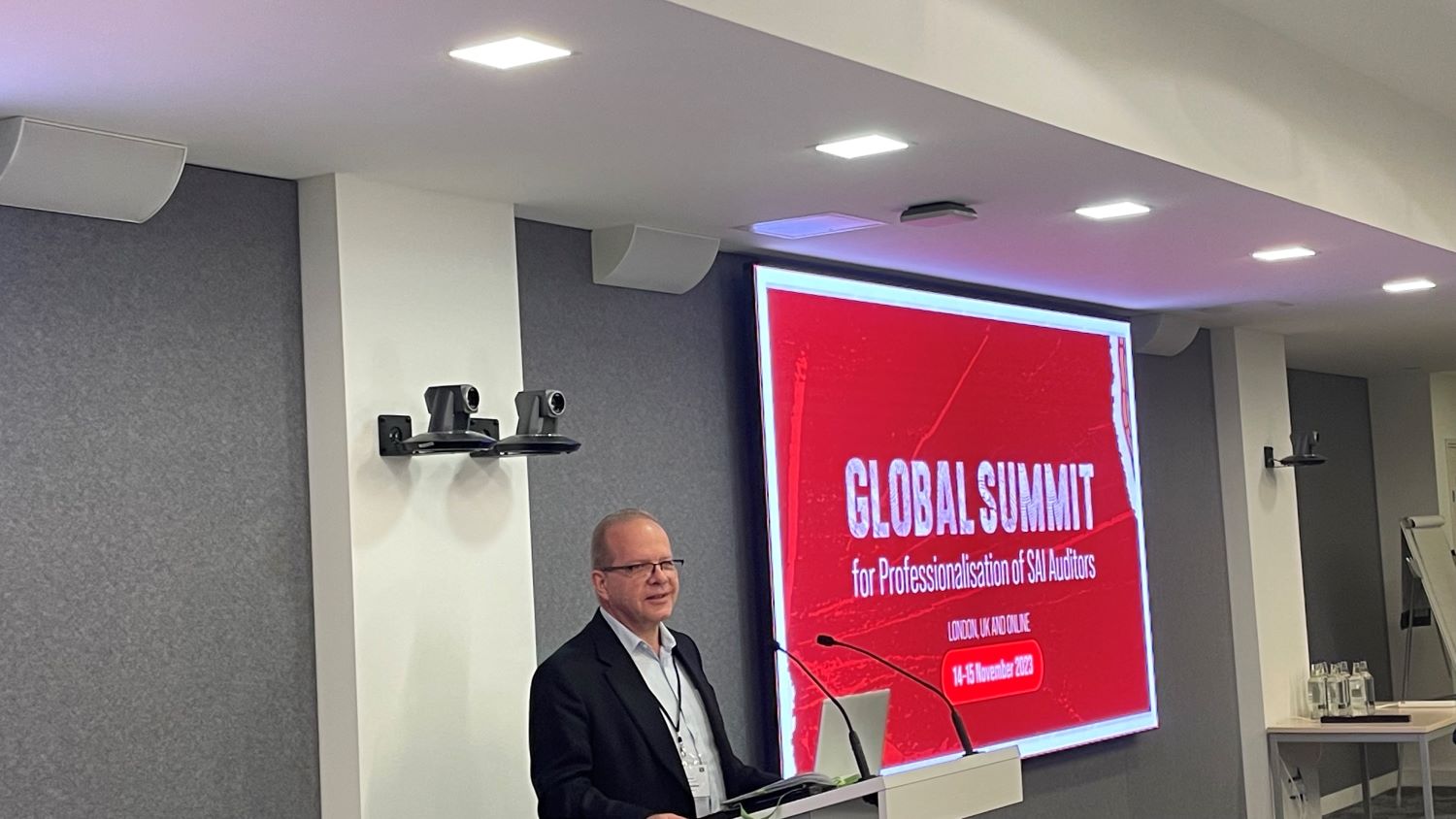
14 November 2023, Oslo, Norway: IDI’s Global Summit in London convenes Supreme Audit Institutions (SAIs) and key stakeholders from around the world to discuss how SAIs contribute to people and planet by engaging in the growing movement on sustainability reporting and oversight.
‘SAI audits have contributed significantly to the follow up and review of UN Sustainable Development Goals since 2017. As discussions on sustainability reporting in the public sector gain momentum, it is important for SAIs to provide their perspectives on robustness of sustainability reporting by those charged with governance.’
So reported Ms. Archana Shirsat, Deputy Director General of the INTOSAI Development Initiative (IDI) at IDI’s Global Summit on Professionalisation of SAI Auditors in London, 14-15 November 2023.
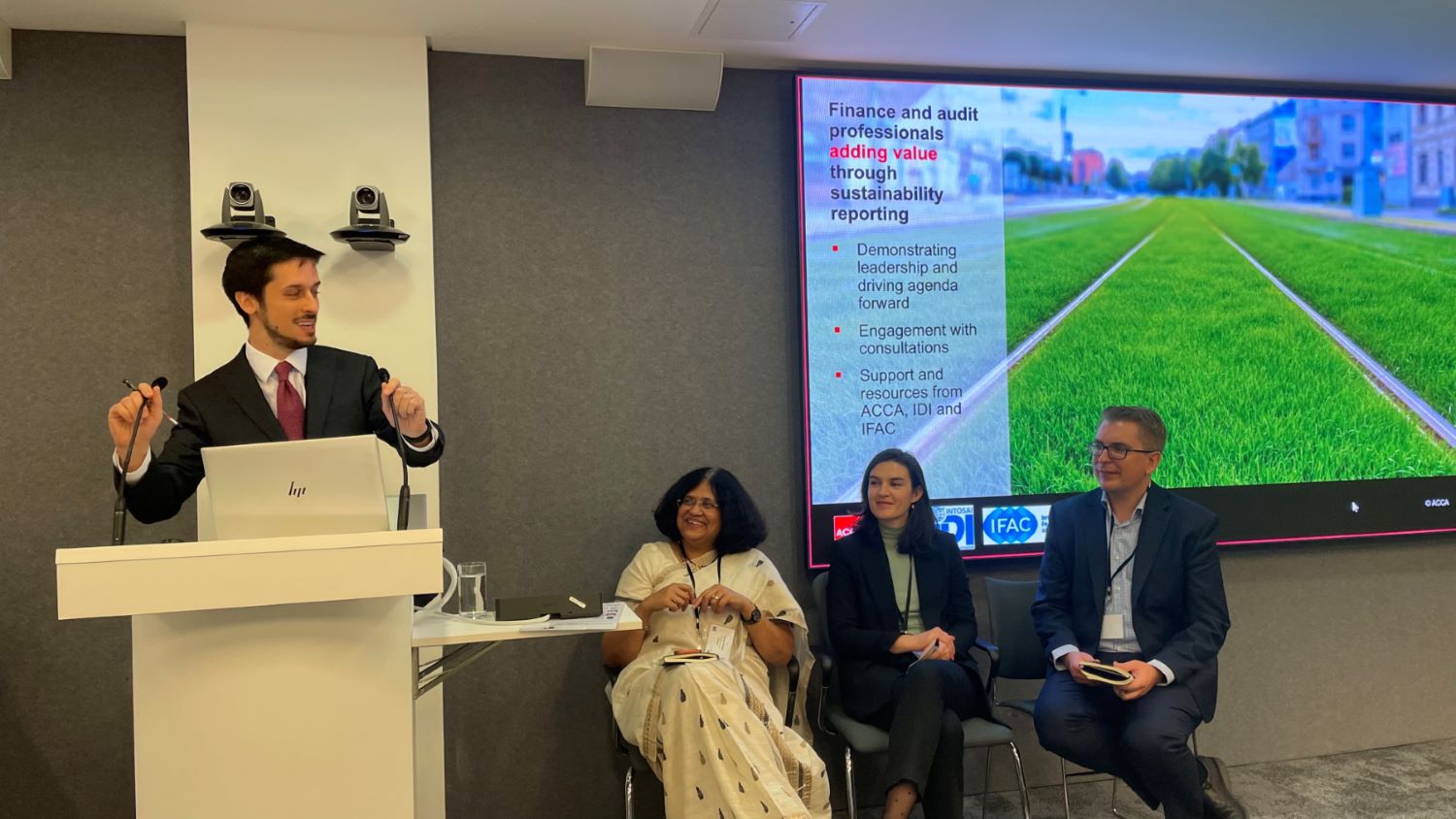
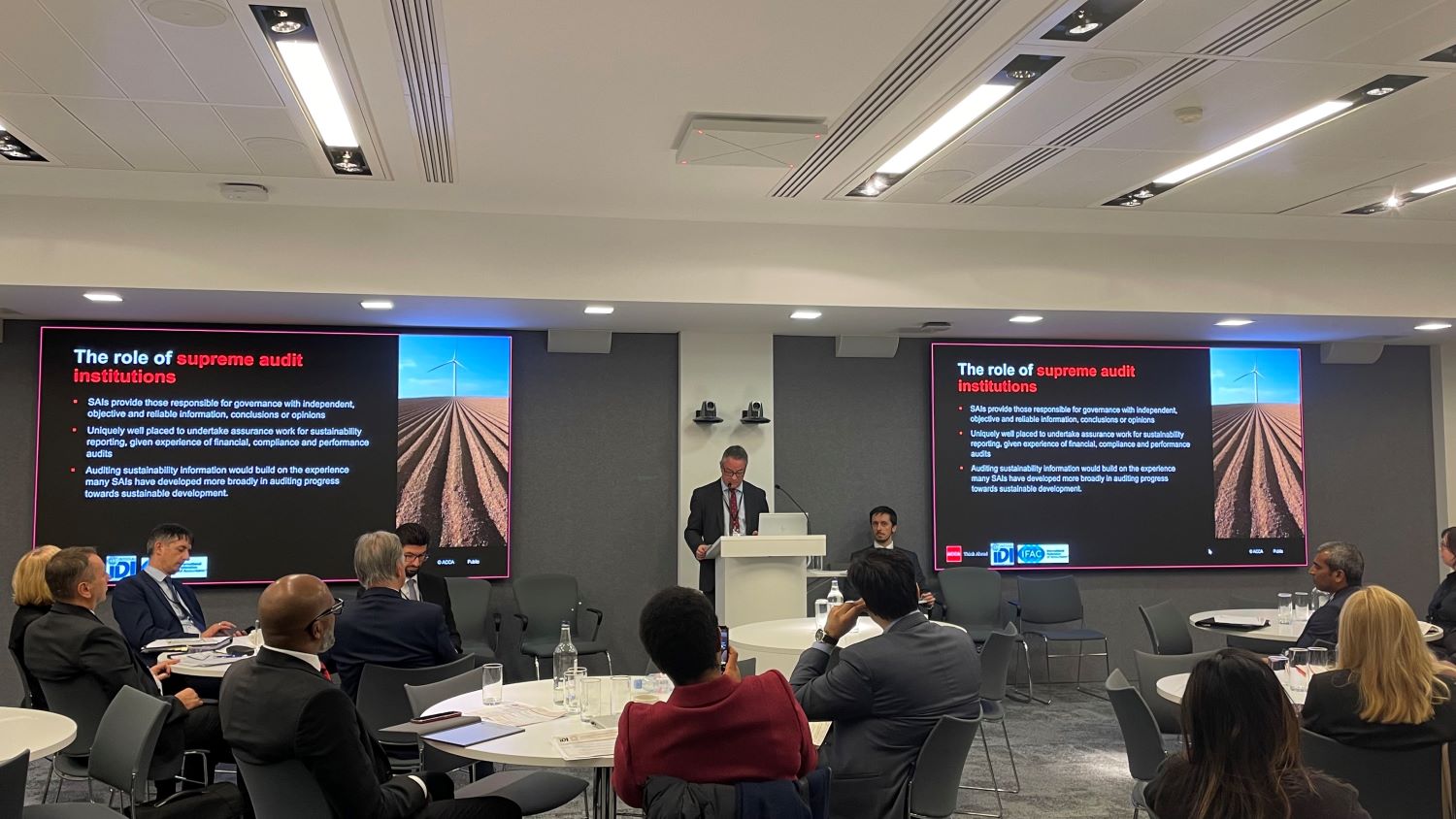
A session on the role of SAIs in sustainability on 14 November heard how comprehensive and relevant sustainability reporting must be accompanied by effective oversight mechanisms. A joint report by IDI, ACCA and IFAC highlighting the need for public auditors to engage and define their role was formally launched at the session at IDI’s Global Summit.
The report, ‘Preparing for sustainability reporting and assurance: an introduction for the public sector globally’, explores why the public sector should undertake sustainability reporting and the importance of oversight of this information by government auditors.
Mike Suffield, Director of Policy and Insights, ACCA said: ‘We are witnessing a rapidly developing reporting landscape for public sector sustainability reporting. Supreme audit institutions need to be closely involved in the development of that landscape, so they can provide assurance to the public sector and society generally. Supreme audit institutions should not wait to be asked to join in with sustainability. They need to take the initiative to enable the building of trust in the reporting process.’
Comprehensive and relevant sustainability reporting must be accompanied by effective oversight mechanisms. The approach to oversight needs to be appropriate to the type of information being reported on and SAIs with their experience in financial, compliance and performance audit are uniquely well placed to undertake auditing of sustainability reporting.
SAIs also have a system-wide perspective of government performance that is often not replicated elsewhere in the public sector. This enables them to consider approaches to sustainable development across different parts of the public sector.
The report identifies six reasons why the public sector should undertake sustainability reporting:
Both the Global Summit and the report underline that governments and public sector entities need to focus on the areas of greatest impact. And this is where SAIs can really add value.
Bruce Vivian, Principal, Accountancy Education, IFAC, said: ‘At IFAC we believe that if sustainability disclosures are to be trusted, they need to be subject to high-quality, independent, external assurance. For the public sector, SAIs have a pivotal role to play in independent oversight of sustainability reporting by government entities, including the provision of assurance to enhance the credibility of this reporting. The work of SAIs can help stakeholders have confidence in reported information for decision-making and accountability purposes, with the ultimate goal of advancing sustainability outcomes in the public sector.’
SAIs can ensure that there is alignment with the overall government plan to reduce emissions and achieve wider sustainability goals and the goals and work of the myriad individual public sector entities.
Pamela Monroe Ellis, Auditor General of Jamaica, said: ‘The role of the SAI is a unique one. We look across a country’s government and assess whether the systems for promoting sustainability are efficient and effective. As sustainability reporting develops, the engagement of SAIs in the process of developing frameworks and standards is vital.’
Read the report
Read the Exec Summary
For IDI media enquires please contact:
On IDI and INTOSAI: Director General: Einar.gorrissen@idi.no
On IDI’s Summit & Report: Deputy Director General: archana.shirsat@idi.no
Media and communications: Communications Manager jill.marshall@idi.no“>jill.marshall@idi.no
For ACCA media enquiries, contact:
ACCA News Room
E: newsroom@accaglobal.com
X: @ACCANews
accaglobal.com
About IDI
The International Organization of Supreme Audit Institutions (INTOSAI) operates as an umbrella organisation for the external government audit community. It is an autonomous, independent and non-governmental organisation with special consultative status with the Economic and Social Council of the United Nations. The INTOSAI Development Initiative (IDI) support SAIs in developing countries to build and strengthen capacity. The INTOSAI-Donor Cooperation (IDC) mobilises funding from donors to strengthen SAIs, focusing on governance, development and poverty reduction.
About ACCA
We are ACCA (the Association of Chartered Certified Accountants), a globally recognised professional accountancy body providing qualifications and advancing standards in accountancy worldwide.
Founded in 1904 to widen access to the accountancy profession, we’ve long championed inclusion and today proudly support a diverse community of over 247,000 members and 526,000 future members in 181 countries.
Our forward-looking qualifications, continuous learning and insights are respected and valued by employers in every sector. They equip individuals with the business and finance expertise and ethical judgment to create, protect, and report the sustainable value delivered by organisations and economies.
Guided by our purpose and values, our vision is to develop the accountancy profession the world needs. Partnering with policymakers, standard setters, the donor community, educators and other accountancy bodies, we’re strengthening and building a profession that drives a sustainable future for all. Find out more at: www.accaglobal.com

I
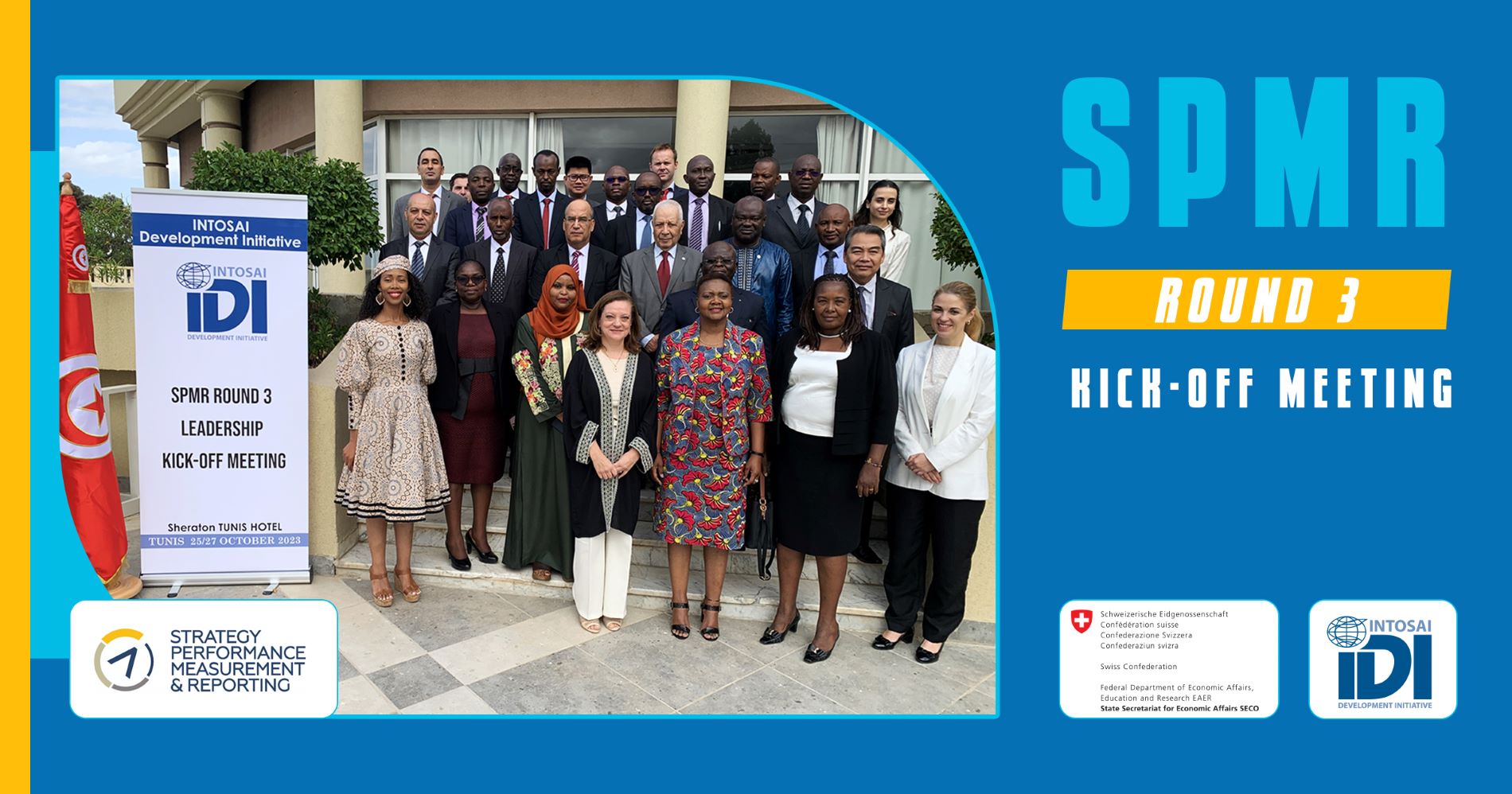
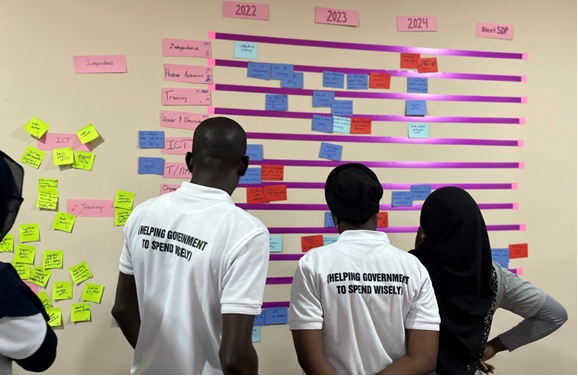
Within the scope of the IDI’s Strategy, Performance Measurement, and Reporting (SPMR) initiative, 18 representatives from 9 SAIs gathered in Istanbul to attend the workshop on Strategy Implementation and Reporting.
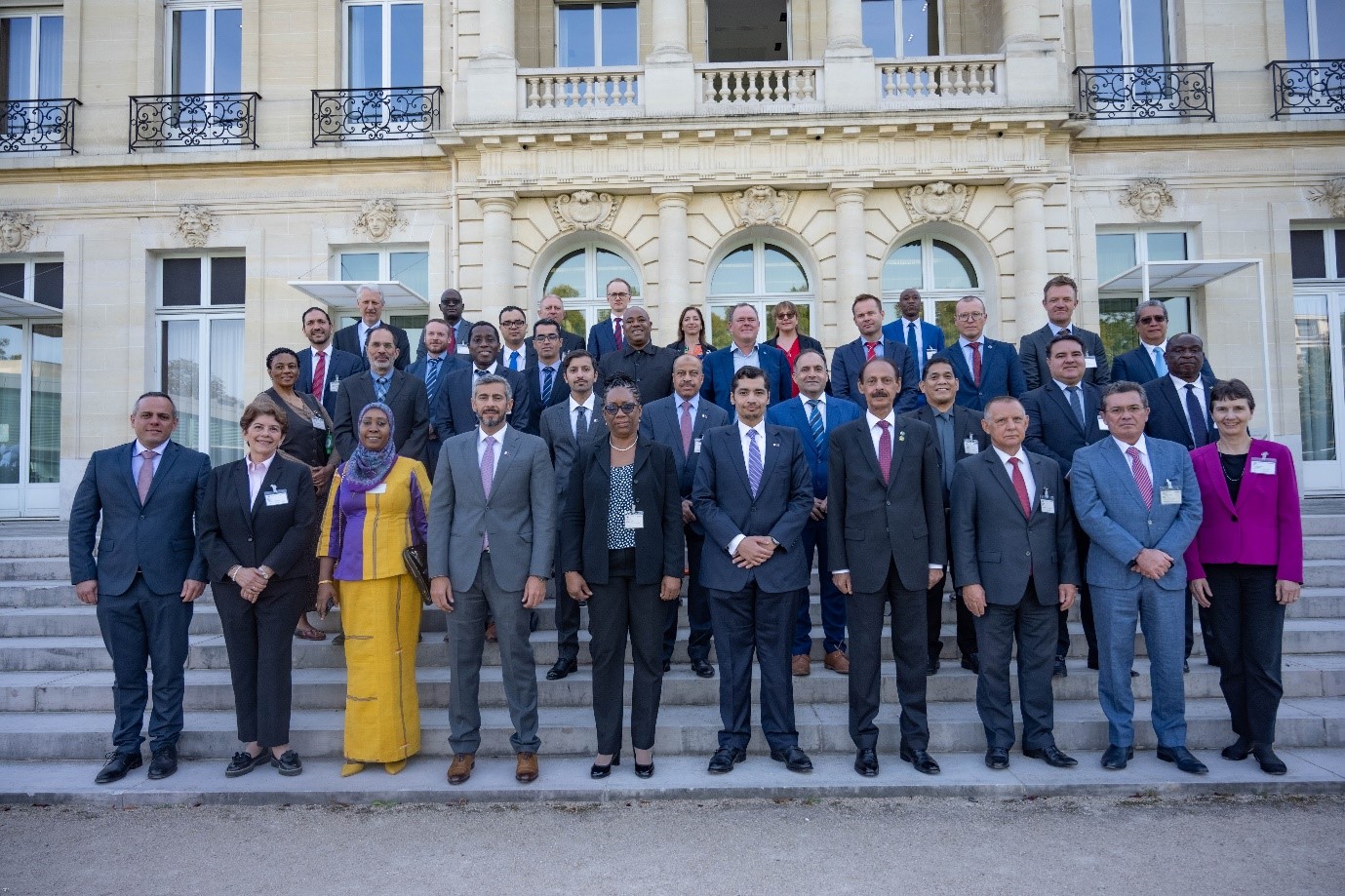
Leaders from Supreme Audit Institutions (SAIs) worldwide came together in Paris, France, from October 11 to 13, 2023, for the second Masterclass on SAI Independence. This event, hosted by IDI as part of the Mastery series, in collaboration with the Organisation for Economic Co-operation and Development (OECD) and the Court of Accounts of France, aimed to provide SAI leaders with essential tools and strategies to protect the autonomy of their institutions. Opening remarks from both Einar Gørrissen, Director General of IDI, and János Bertók, Deputy Director of OECD Public Governance emphasised the vital role of independent SAIs in transparency, accountability, and good governance. The Masterclass’s goal was to offer participants diverse perspectives, legal expertise and advocacy tools to safeguard their institutions’ independence, even in challenging circumstances. Discussions during the Masterclass underscored the need to broaden the concept of SAI independence beyond the content of legal frameworks. INTOSAI’s independence principles, as reflected in both Lima and Mexico Declarations, are linked to informal components of the institutional framework such as organisational culture, beliefs, incentives and expectations. There is a need to address these elements to understand the way SAI independence principles are being implemented across the INTOSAI community. In addition, SAI leaders considered how this new perspective on independence should also consider the interaction of SAIs with other oversight institutions who share the same independence needs. The Masterclass also highlighted academia’s angle on the role of SAIs as a key player in public accountability and the impact of the audit work on rule of law and transparency. Representatives from various countries, including Belize, Brazil, Costa Rica, Cyprus, Jordan, Pakistan, Paraguay, Philippines, Poland, Qatar, Saudi Arabia, Solomon Islands, Chad, Zambia, and France met with distinguished figures from the INTOSAI Community, including AFROSAI-E. They also heard from esteemed speakers and partners from renowned institutions like the University of Oslo, USAID, the University of Deuso, Mexico Accountability Network, Africa Development Bank, and the International Monetary Fund. Beyond serving as a knowledge-sharing platform, the Masterclass also provided the opportunity for active participation in shaping the IDI-OECD project on SAI independence. The collaborative spirit of the event – as evident in the group photograph – underscored these global leaders’ unwavering commitment to promoting transparent, accountable, and effective governance worldwide. Throughout the event, participants engaged in fruitful discussions, sharing their experiences and gaining valuable insights. The Masterclass, with its lively discussions and shared expertise, promised to empower SAI leaders, fostering a strong network of advocates dedicated to championing SAI independence around the world. For more information on IDI’s Masterclasses, visit Mastery on IDI’s website. For more on SAI Independence, go to IDI’s SAI Independence Resource Centre (SIRC)
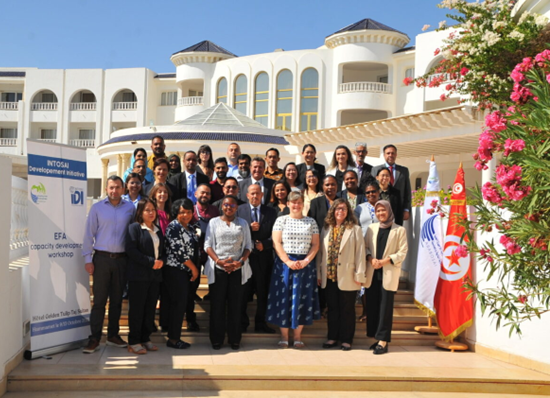
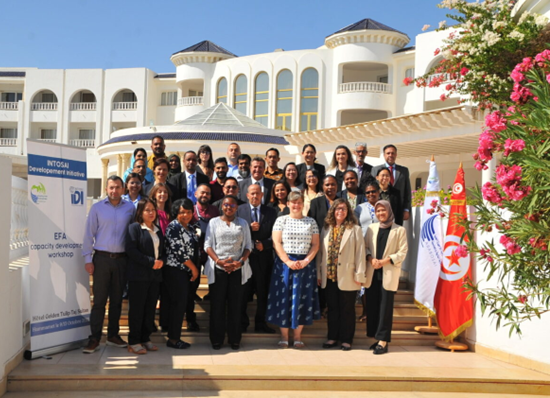
From 9 to 13 October 2023, thirty Equal Futures Audit (EFA) changemakers, four mentors and two IDI senior managers participated in a workshop in Hammameth, Tunisia. The event was part of the blended professional education for the EFA Changemakers.
Participants attended from the SAIs of Brazil, Egypt, Indonesia, Kosovo, Maldives, Mauritania, Nepal, Pakistan, Palestine, Philippines, Serbia, Thailand, Tunisia, Tuvalu and Vanuatu, with mentors hailing from the SAIs of Georgia, Kenya, Philippines and USA.
The meeting’s objectives were to continue the capacity development activities started online, and to discuss the approach to be taken related to EFA audit and strategy.
After the workshop, the changemakers will lead teams to develop a strategic audit plan for auditing equality in their SAIs, and will conduct an audit on a theme related to equality.
You can find more information about the EFA initiative at: https://www.idi.no/work-streams/relevant-sais/equal-futures-audit/
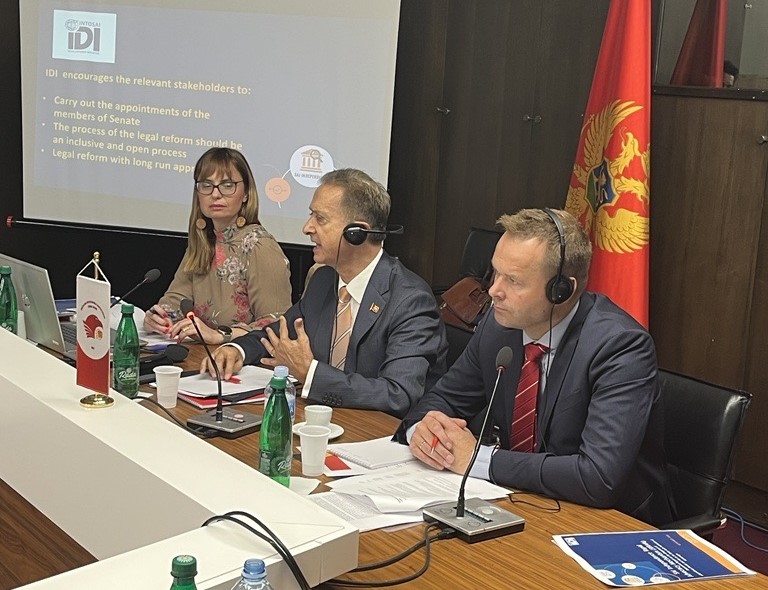
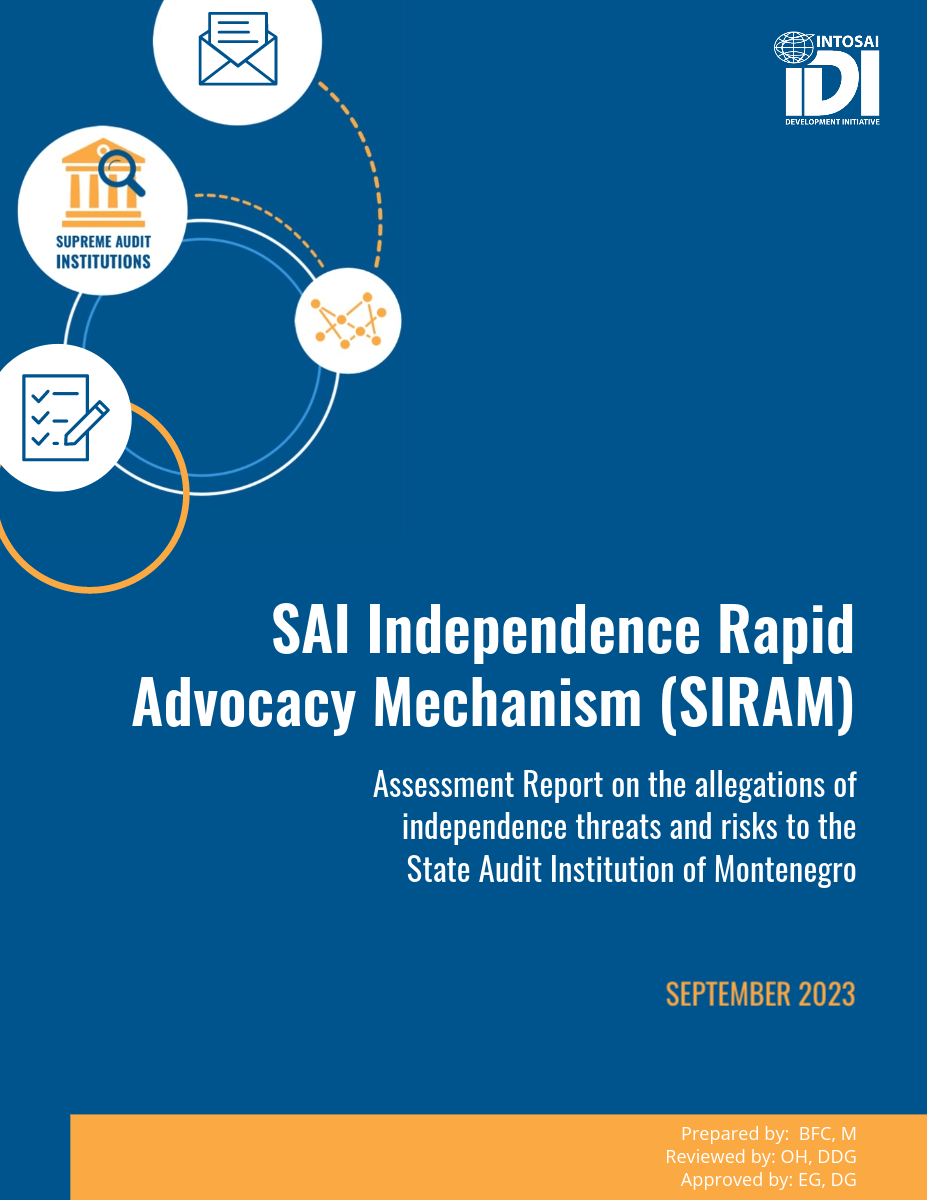
Read the findings and full report
Supreme Audit Institutions (SAIs) play a key role in leading effective governance and accountability practices, especially by providing oversight, transparency and government accountability. But when hindered from fulfilling an institutional mandate, how can we ensure SAIs’ autonomy and effectiveness? With the launch of INTOSAI Development Initiative’s newest publication, SAI Independence Rapid Advocacy Assessment Report on allegations of independence threats and risks to the State Audit Institution of Montenegro, the report aims to impart expert findings and actionable recommendations regarding the protection and enhancement of institutional governance within the case presented.
Built on the principles of the Lima and Mexico Declarations, the SIRAM Report produced for the State Audit Institution of Montenegro addresses various pillars of SAI independence – which is a vital dimension of good governance and accountability in the public sector. Specifically, using SIRAM’s unique methodology and assessment process to evaluate the case, the compiled evidence is summarised by these findings:
Conclusions
As a resource, the report provides several actionable steps and recommendations based on the evidence gathered during the SIRAM assessment conducted in Montenegro. Recommendations covered a broad array of topics relevant for both the INTOSAI community, parliamentarians and the Executive, as well as other external stakeholders in the accountability ecosystem. Namely, that the potential reform of the Audit Law be an inclusive and open process with the participation of the current members of the SAI’s Senate and other relevant stakeholders such as CSOs. Further policy and advocacy actions suggested ensuring that SAIs have necessary resources in accordance with existing good practices in the INTOSAI community in line with Mexico Declaration principles, as well as promoting advocacy and fostering support for SAIs’ independence at the global level.
The latest SIRAM Report on the independence risks and challenges faced by the State Audit Institution of Montenegro examines efforts to inhibit transparency, accountability, and governance. By addressing SAI independence challenges and offering recommendations, the report aims to strengthen international democracy and global governance work.
Click here to access and read the full SIRAM Report and stay tuned for insights and updates regarding ongoing SIRAM processes.

IDI is honoured and delighted to have signed funding agreements with SECO and USAID in recent weeks.
Oslo, Norway, 28 September 2023: Funding from two significant partners in the global arena of public financial management, integrity and accountability – SECO and USAID – is set to bolster IDI’s support for Supreme Audit Institutions (SAIs) around the world for the next several years.
As the capacity development arm of INTOSAI – the global organisation supporting Auditor-Generals’ offices and their equivalents across the world – IDI provides programmes, initiatives and peer-to-peer guidance to support SAIs in developing countries to enhance strong, effective and independent public financial management. In addition to INTOSAI and other INTOSAI bodies, IDI collaborates with significant stakeholders with the same goals of stronger public sector accountability and integrity, for the ultimate benefit of citizens around the globe.
IDI is honoured and delighted to have signed funding agreements with two such partners in recent weeks. The Swiss State Secretariat for Economic Affairs (SECO) will provide a total of 6.9 million Swiss Francs towards the activities of IDI’s Well-Governed and Independence work streams over the period of 2023 to 2028, while USAID has allocated a total of 1 mill USD for the Accelerated Peer-support Partnership and Global SAI Accountability Initiative programmes for 2023-2027.
“Both these funding agreements will help IDI to further support developing SAIs in the formation and implementation of their strategic plans and, vitally, the delivery of their audits of government spending. But these agreements also signal something more,” says IDI’s Director General, Einar Gørrissen. “Coming from two such significant partners in the field of public financial accountability, this funding highlights the fervent commitment around the world to strengthening public financial management and engendering public trust in SAIs everywhere, against a background of diminishing trust overall in governments and their proper use of public resources.”
About the SECO funding: The new five-year funding agreement between SECO and IDI builds on the success of the previous phase of cooperation between the two organisations, which focused on supporting the strategic management of Supreme Audit Institutions (SAIs). The new programme has a broader scope that encompasses support for SAI governance and SAI independence for stronger public sector accountability and integrity.
Says SECO’s Head of Operations, Martin Saladin: “Strong and independent Supreme Audit Institutions are critical to increase transparency, counter corruption and ensure public funds are allocated in an effective and efficient way. SECO is delighted to extend its partnership with IDI to support Supreme Audit Institutions and strengthen their links to anti-corruption agencies, parliaments and civil society organizations. Fostering the accountability of the public sector is key to ensure reliable service delivery to citizens and to progress against the 2030 agenda for sustainable development.”
“This will include a component on country-level support to SAIs in those areas, including strengthening their link with civil society organisations,” comments Dafina Dimitrova, who leads the Strategic Management programmes in IDI. “Needless to say, IDI is immensely grateful for SECO’s continued trust and support.”
About the USAID funding: With an emphasis on peer-to-peer, country-level support, USAID is committing an estimated I mill USD for the Accelerated Peer-support Partnership (PAP/APP) and Global SAI Accountability Initiative (GSAI) programmes over the period 2023-2027.
The funding supports the PAP-APP and GSAI programmes for SAIs in USAID partner countries, where they see the same risks to public accountability. These programmes are designed to enhance the capacity of SAIs in particularly challenging contexts. Because of the importance of this work, the agreement also has an option for additional funding to provide deeper support to selected countries and wider IDI and INTOSAI-Donor Cooperation activities.
Says Jostein F. Tellnes who leads the project in IDI, “In many of these countries, where there is an urgent need for better governance and use of public resources, we experience a great dynamic between the SAI and the peers providing support. We look forward to continuing our collective efforts to enable the SAIs to succeed in delivering more and better audits that address national challenges.”
IDI expresses its deep gratitude to SECO and USAID for their continued and significant support and commitment.
ENDS
About us
The International Organization of Supreme Audit Institutions (INTOSAI) operates as an umbrella organisation for the external government audit community. It is an autonomous, independent and non-governmental organisation with special consultative status with the Economic and Social Council of the United Nations. The INTOSAI Development Initiative (IDI) support SAIs in developing countries to build and strengthen capacity. The INTOSAI-Donor Cooperation (IDC) mobilises funding from donors to strengthen SAIs, focusing on governance, development and poverty reduction.
Contacts
For more about IDI and INTOSAI, please contact einar.gorrissen@idi.no
For more on the SECO funding and related programmes, please contact IDI’s Dafina.dimitrova@idi.no
For more on the USAID funding and related programmes, please contact IDI’s Jostein.tellnes@idi.no
Please direct media enquiries to jill.marshall@idi.no
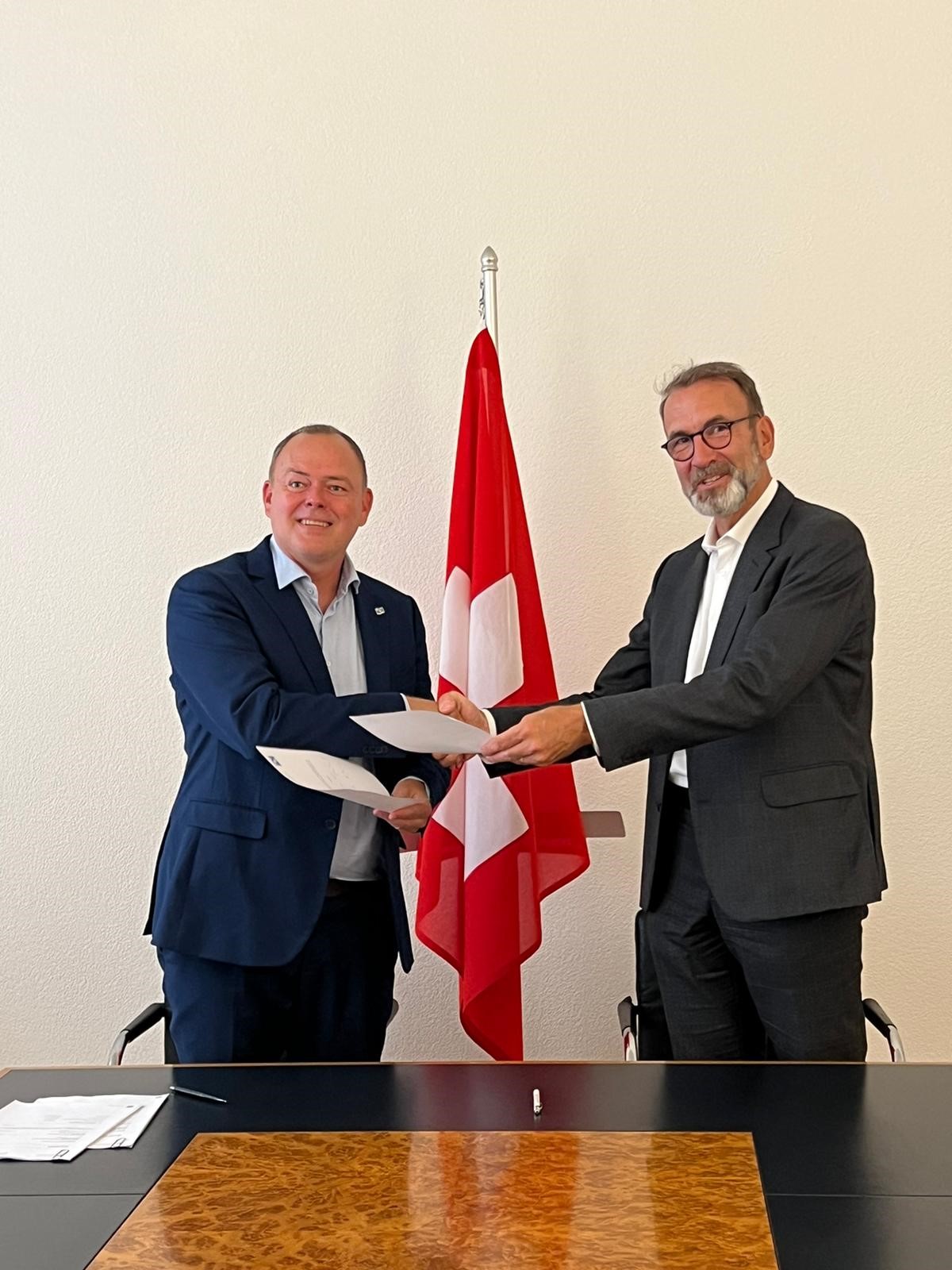
IDI’s Director-General Einar Gørrissen and SECO’s Head of Operations, Martin Saladin

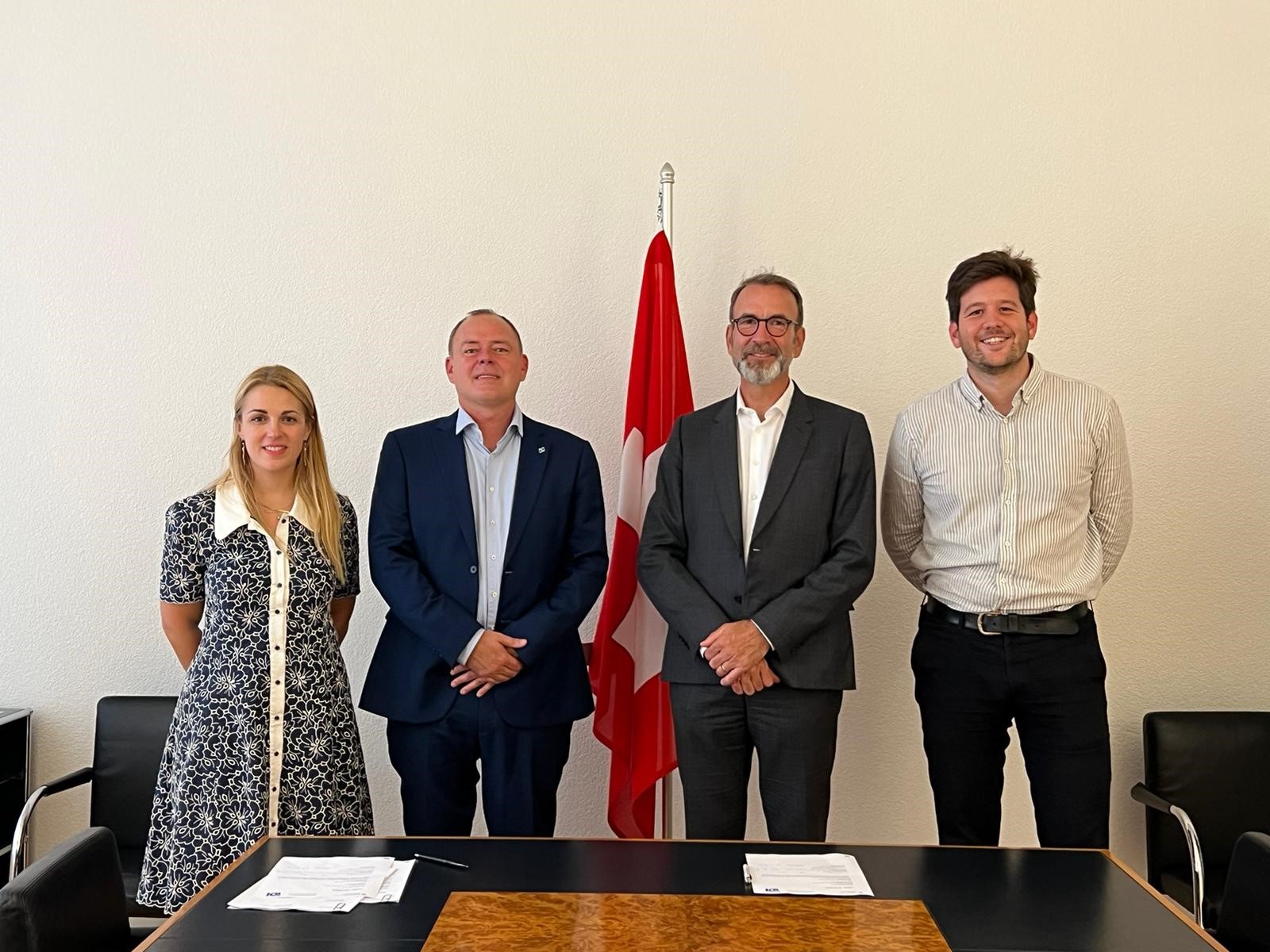
IDI’s Director-General Einar Gørrissen and SECO’s Head of Operations, Martin Saladin, together with the program team: IDI’s Dafina Dimitrova
and SECO’s Franzisca Spørri and Philippe Brugger
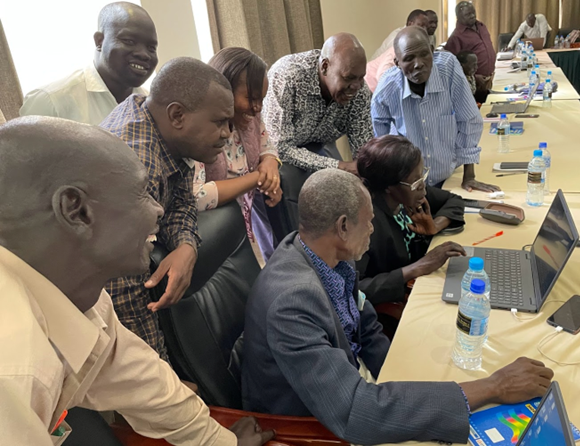
SAI staff participating in IDI capacity development activities